Skip to content
Outdoor Tech Index
Smart Coop

Predator Protection

Automated deterrents range from motion-triggered lights and sound alarms to electric poultry netting, aimed at the animals most likely to target a coop — raccoons, foxes, hawks, and, depending on your region, larger predators. No single deterrent is foolproof; most experienced keepers combine a secure structure with one or more of these rather than relying on tech alone.

Outdoor Tech Index Editorial Team · Last updated 2026-08-15

Outdoor Tech Index may earn a commission when you buy through links on this page. This does not affect the price you pay.

No single deterrent stops every predator — what actually works, based on general wildlife-deterrence guidance, is layering a secure structure with more than one type of deterrent, since predators that grow used to one static device often aren't fazed by a second, different one.

We've researched and verified two solar predator-deterrent lights directly against their current Amazon listings. Both use the same core mechanism — a flashing light meant to mimic another animal's eyes — from different manufacturers, at similar per-unit pricing.

Comparison Table

ProductBest ForPowerSubscriptionPrice
ASPECTEK Predator Eye PRO Solar Repeller (2-Pack)Shoppers who want two lights out of the box to cover more than one side of a coopsolarNot required$22–$28Check Price
Nite Guard Solar Predator Control LightShoppers who want a low-cost, no-wiring predator deterrent to pair with a secure coopsolarNot required$20–$25Check Price

Our Top Picks

We researched and verified 2 products in this category directly against current retailer listings for price, ratings, and published specifications. Each pick below includes what we found genuinely good about it and at least one real trade-off — not just promotional copy.

1. ASPECTEK Predator Eye PRO Solar Repeller (2-Pack): Best Value 2-Pack
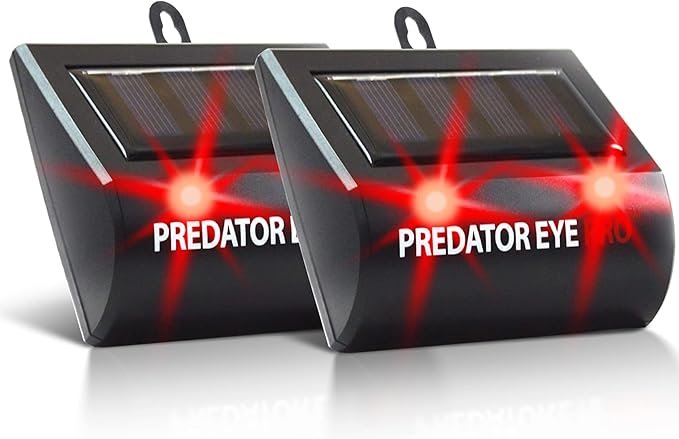
ASPECTEK Predator Eye PRO Solar Repeller (2-Pack) product photo

ASPECTEK · ASPECTEK Predator Eye PRO Solar Repeller (2-Pack) — product photography from the manufacturer/retailer listing.

Features

  • Solar-powered flashing red LED predator deterrent, sold as a 2-pack
  • Targets cats, dogs, foxes, birds, skunks, deer, and raccoons, per the manufacturer
  • Weatherproof, no batteries required
  • Designed for garden, farm, fence, and coop placement
  • Sold as a 2-pack at a similar per-unit price to Nite Guard's single-pack, useful for covering two sides of a coop
  • Roughly 1,454 ratings on this listing, a substantial independent review base
  • Same core solar/no-wiring approach as our other predator-light pick, from a different manufacturer

What We Think

This works the same way as our other predator-light pick, Nite Guard — a solar-powered flashing red LED meant to mimic another animal's eyes and trigger a predator's flight instinct — but ASPECTEK sells it as a 2-pack at a similar per-unit price, which is convenient if you want to cover two sides of a coop out of the box. At roughly 1,454 ratings, it has a substantial independent review base. Like any light-based deterrent, it isn't foolproof against a persistent or habituated predator, and we haven't independently compared its real-world effectiveness against Nite Guard's. It also needs a sunny mounting spot to stay charged. If you specifically want two lights without buying two separate single-packs, this is the more convenient option between our two predator-light picks.
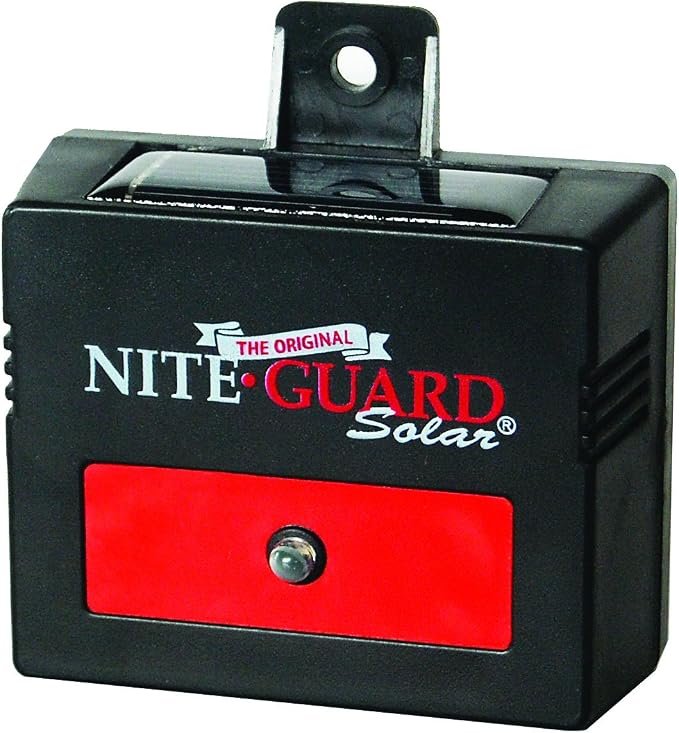
2. Nite Guard Solar Predator Control Light: Best Established Brand

Nite Guard Solar Predator Control Light product photo

Nite Guard · Nite Guard Solar Predator Control Light — product photography from the manufacturer/retailer listing.

Features

  • Solar-powered flashing red LED, mounted at predator eye level
  • Mimics the appearance of another animal's eyes to trigger a predator's flight instinct, per the manufacturer
  • Fully weatherproof, no batteries required
  • Also sold in multi-packs for perimeter coverage
  • 4.0 stars across roughly 2,000 ratings on this single-pack listing, one of the longest-established predator-deterrent lights on the market
  • Solar powered — no battery replacement or wiring
  • Low cost makes it easy to place multiple units around a coop perimeter

What We Think

Nite Guard has one of the longest track records of any predator-deterrent light on the market, and at roughly 2,000 ratings and 4.0 stars, its single-pack listing has a solid independent review base. It's solar-powered with no batteries or wiring, and low cost makes it practical to place several around a coop perimeter. Compared to our ASPECTEK pick, it's sold as a single unit rather than a pair, so covering multiple sides of a coop costs more per light. As with any light-based deterrent, it isn't foolproof on its own — most experienced keepers pair it with a secure coop structure and other deterrents rather than relying on light alone, and we haven't independently verified its effectiveness against habituated predators. A sunny mounting spot is necessary to keep it charged.

Physical security instead of (or alongside) deterrent lights

Buried hardware cloth, latched doors, and a fully enclosed run address predator access directly rather than relying on a light or sound to discourage an approach. Most experienced keepers treat structural security as the non-negotiable foundation, with deterrent lights as a supplementary layer rather than a replacement for it.

Who Should Buy Which

  • Wants to cover two sides of a coop out of the box: ASPECTEK Predator Eye PRO Solar Repeller (2-Pack)Sold as a 2-pack at a similar per-unit price to the single-pack alternative.
  • Wants the longer-established brand: Nite Guard Solar Predator Control LightOne of the longest track records of any predator-deterrent light on the market.
  • Building a full layered defense: Either light, plus structural securityThe specific light brand matters less than combining it with a secure coop structure and, ideally, more than one deterrent type.

What to Look For

  • Layered defense: most experienced keepers combine multiple deterrents rather than relying on just one.
  • Trigger sensitivity: too sensitive trains you to ignore false alarms; too insensitive misses real threats.
  • Regional predators: what deters a raccoon won't necessarily deter a hawk or a coyote — match the deterrent to your actual risk.
  • Solar reliability: light-based deterrents need a sunny mounting spot to stay charged through the hours they're actually needed.
  • Habituation risk: some predators grow used to a static deterrent over time, which is part of why rotating or combining methods tends to outperform one fixed device long-term.

FAQ

+Are light-based deterrents enough on their own?

Most experienced keepers don't rely on a single deterrent — a secure structure (solid walls, buried hardware cloth, latched doors) is the foundation, with lights, sound, or fencing as an additional layer rather than a replacement for structural security.

+Do deterrents stop working over time?

Some predators can become habituated to a static, repetitive deterrent, based on general wildlife-deterrence guidance — rotating or combining different types of deterrents is generally considered more effective long-term than relying on one fixed device indefinitely.

+Do these lights work against all predator types?

Manufacturers list a range of targeted animals (cats, dogs, foxes, raccoons, and others, depending on the product), but we haven't independently verified effectiveness against any specific species. Treat published target-animal lists as manufacturer claims, not confirmed results.

+How long do these lights last before needing replacement?

Neither manufacturer publishes a specific product lifespan we've independently verified. Both are solar-powered with no batteries to replace, which reduces one common failure point, but the LED and solar cell themselves will eventually degrade over years of outdoor exposure.

+Can I use these lights alongside electric poultry netting?

Yes, in principle — a light-based deterrent and electric fencing address different parts of the problem (deterrence vs. physical barrier) and aren't mutually exclusive. We haven't tested this specific combination ourselves, but layering deterrent types is generally recommended.

+Do these lights disturb the chickens themselves?

We haven't independently verified this. They're designed to mimic predator eyes and trigger a flight response in predators, not to interact with poultry directly, but placement close to where birds roost could plausibly cause some disturbance — worth considering when mounting.

Predator protection is the one category on this page where the products are explicitly a supplement, not a solution — structural security still does the heavy lifting. Pair a deterrent light with the Cameras picks above if you also want visibility into what's actually approaching your coop. Browse the full Smart Coop section for every category we've covered.

Next up