
How to Build a Critical-Load Backup Power System
Measure the loads that actually matter, size stored energy and inverter output separately, add a realistic recharge path, and test the outage routine before the grid fails.
Outdoor Tech Index Editorial Team · Updated 2026-08-17 · 15 min read
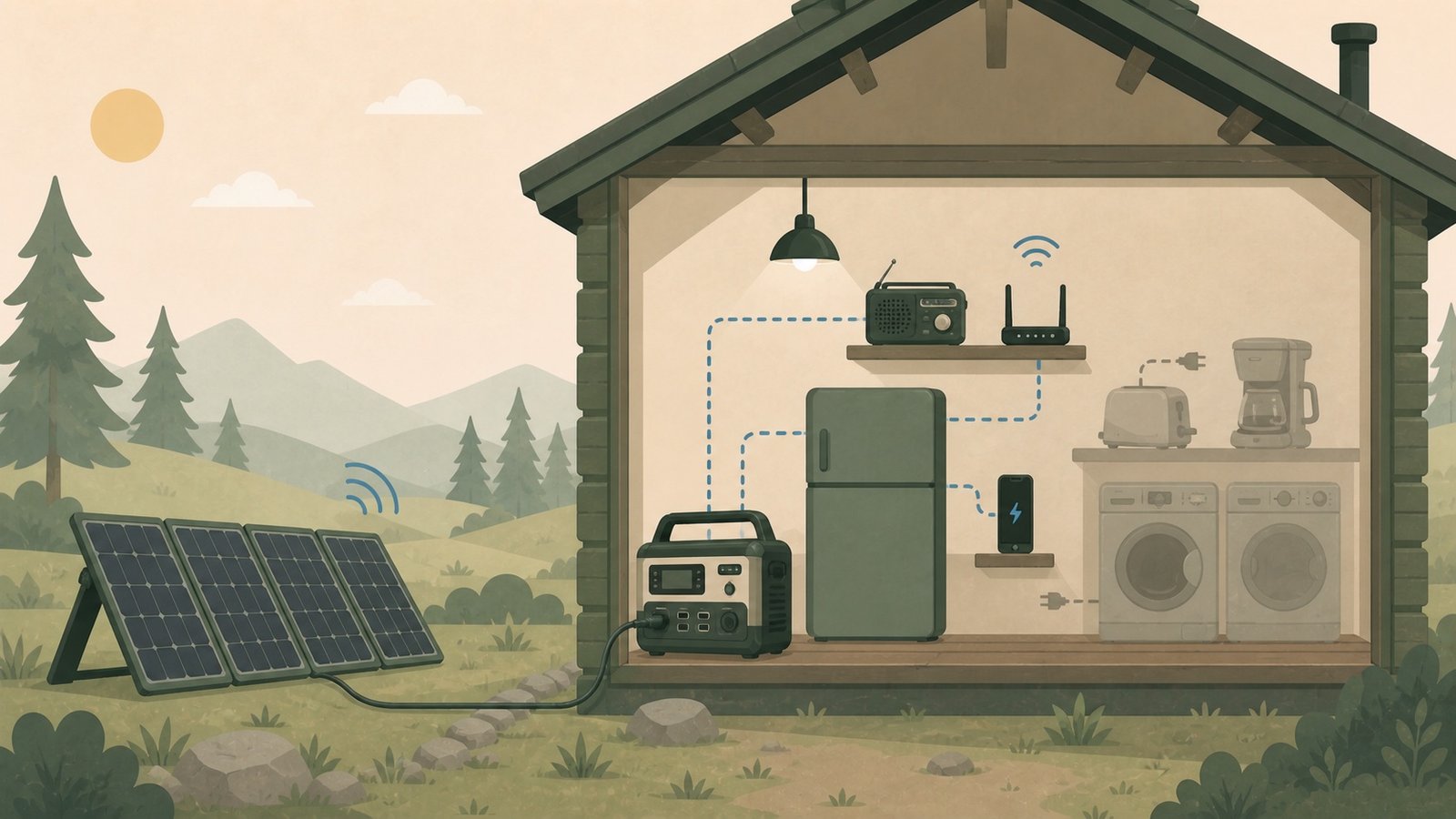
Quick Answer
Safety and scope
Portable power stations should power appliances directly unless a listed transfer method is installed by a qualified professional. Never plug a power station or generator into a household receptacle to energize wiring. Follow manufacturer temperature, ventilation, charging, cable, and storage requirements. Life-support or medically necessary equipment needs a professionally reviewed resilience plan.
Separate energy, power, and recharge
Energy in watt-hours estimates runtime; continuous watts determine what can run at once; surge watts determine whether motors and compressors can start; charging watts determine recovery time. Estimate daily energy as watts × hours, sum the loads, then add conversion losses, standby consumption, cold-weather effects, battery aging, and a reserve. Measure cycling appliances over time with an energy meter instead of multiplying only the nameplate watts by 24 hours.
Worked example: Example planning load: refrigerator 1,200 Wh/day, router 240 Wh/day, four hours of a 10 W lamp = 40 Wh, radio and phone charging = 60 Wh. The subtotal is 1,540 Wh/day. At a preliminary 85% delivered-energy assumption, that is about 1,812 Wh from the battery before reserve. A nominal 1 kWh station would require load scheduling and recharging; it is not automatically a full-day solution.
Build the system in this order
1. Make a critical-load list
Separate essential from convenient. Refrigeration, medical devices, communications, lighting, well or sump pumps, and limited electronics may qualify; electric resistance heating, water heating, cooking, clothes drying, and central air can consume an entire portable battery quickly. Write the minimum acceptable outage routine beside each load.
- ✓ Record voltage and plug type
- ✓ Note whether the load cycles
- ✓ Identify anything that cannot tolerate interruption
2. Measure watt-hours over a representative day
Use a plug-in energy meter for ordinary cord-connected loads. Capture at least 24 hours for refrigerators and other cycling devices, and measure in hot or cold conditions when that drives demand. For fixed equipment or high-voltage circuits, use published data and a qualified professional rather than improvised measurement.
- ✓ Measure startup behavior where the meter supports it
- ✓ Record average and worst observed day
- ✓ Include power-station standby draw
3. Set the autonomy target and reserve
Decide whether the battery must bridge four hours, overnight, one day, or several days without charging. Longer autonomy costs more and weighs more. Add margin for inverter losses, temperature, aging, and forecast uncertainty. A system routinely discharged to its last few percent has no room for a late-starting compressor or an unexpectedly long outage.
- ✓ Define a low-battery cutoff for nonessential loads
- ✓ Plan around the worst useful season
- ✓ Keep an alternate plan for multi-day events
4. Check continuous output and surge
Add the watts of devices that may run simultaneously and compare that total with continuous inverter output. Then investigate starting surge for compressors and pumps. A battery can have ample watt-hours yet still shut down when a motor starts. Prefer dedicated DC or USB outputs for compatible low-voltage devices when that avoids inverter losses.
- ✓ Do not exceed any single outlet rating
- ✓ Use appropriately rated short extension cords
- ✓ Test the actual compressor or pump start
5. Select a realistic charging path
Grid charging is fastest for preparation, but resilience depends on what works during the outage. Solar production varies by location, season, orientation, shading, temperature, and weather. Compare the station’s solar voltage/current window and maximum input with the panel array, use compatible connectors, and estimate location-specific production with a tool such as NREL PVWatts.
- ✓ Never exceed input voltage limits
- ✓ Place portable panels where they remain secure and unshaded
- ✓ Keep connectors dry and strain-relieved
6. Arrange the outage station safely
Place the power station in a dry, temperate, ventilated location with clear access to outlets and controls. Keep it away from heaters, wet floors, direct weather, exits, and combustible clutter. Route cords to prevent trips and door damage. Put a printed load list, cable kit, flashlight, and shutdown thresholds beside it.
- ✓ Test smoke and CO alarms
- ✓ Keep battery units within manufacturer temperature limits
- ✓ Do not cover cooling vents
7. Perform a full transfer drill
Turn off utility power to the test loads safely, connect them exactly as you would during an outage, and run long enough to observe refrigerator cycling, router stability, noise, heat, and remaining capacity. Verify that everyone can identify the correct cords and that no one attempts to backfeed the building.
- ✓ Time setup from dark conditions
- ✓ Record energy used over the drill
- ✓ Update the printed instructions after mistakes
8. Create a load-shedding schedule
Not every load must run continuously. Refrigeration doors can stay closed, phones can charge in batches, and internet equipment can be shut down overnight if communications plans allow. Define battery percentages that trigger each cut. Protect the energy reserved for lighting, alerts, and essential communications.
- ✓ Assign who checks state of charge
- ✓ Write cutoffs in plain language
- ✓ Practice the schedule during the drill
A practical one-day critical-load package
This package is a starting architecture, not a promise of runtime. Measure your refrigerator, router, and any pump or medical load before choosing capacity.

EcoFlow DELTA 2
1,024Wh-class LFP power station
A useful portable reference point with documented 1,800W AC output and up to 500W solar input. Treat roughly 1 kWh as a measured-load starting point, not a whole-house battery.
View product →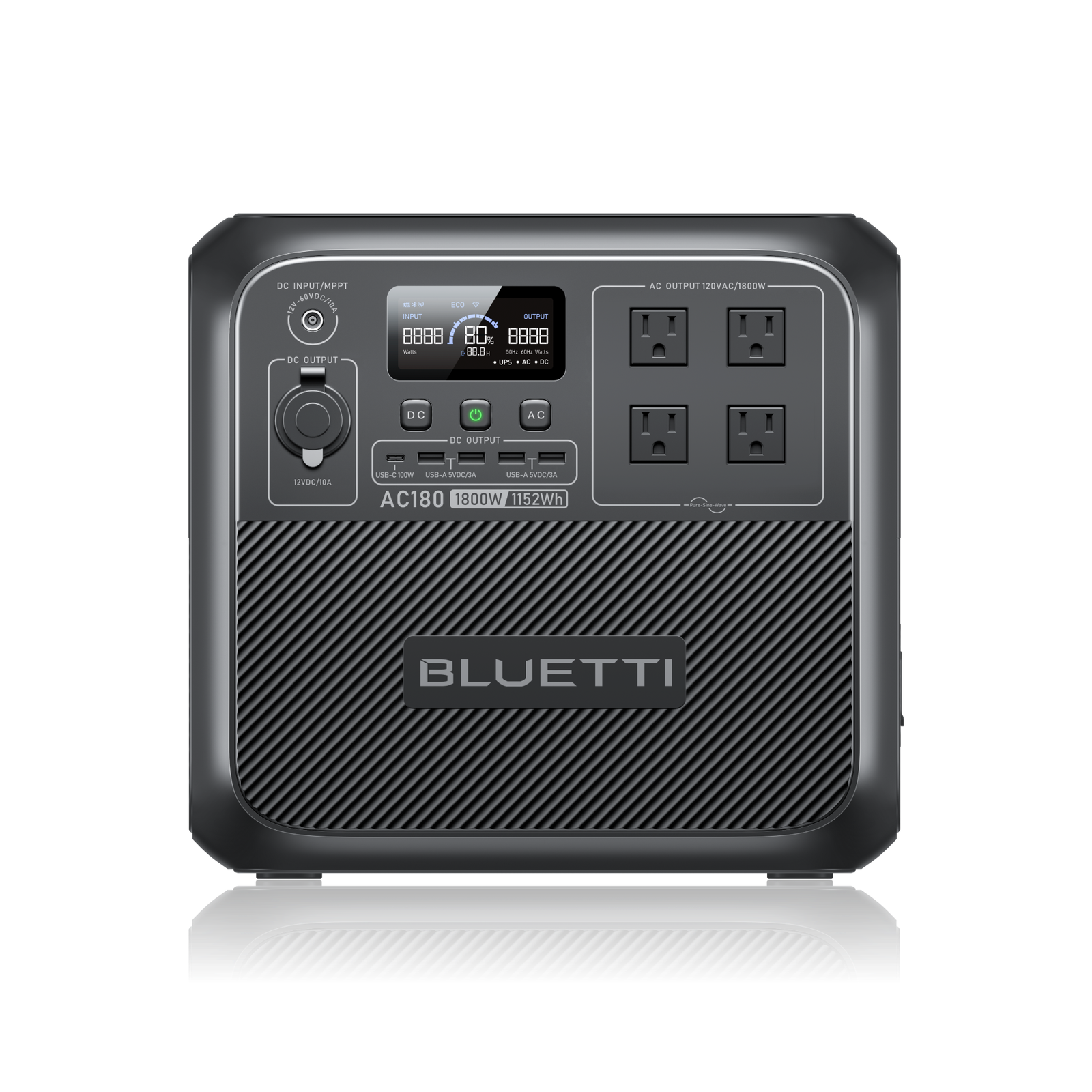
BLUETTI AC180
Alternative 1,152Wh-class station
A comparable all-in-one option with documented 1,800W AC output and 500W maximum solar input. Choose between stations on measured load, connector fit, warranty, and recharge plan—not capacity alone.
View product →Compatible 350–500W solar input
Daylight energy recovery
Add only after verifying the chosen station’s voltage, current, connector, and maximum input. Use NREL PVWatts and local shading to set realistic expectations.
View product →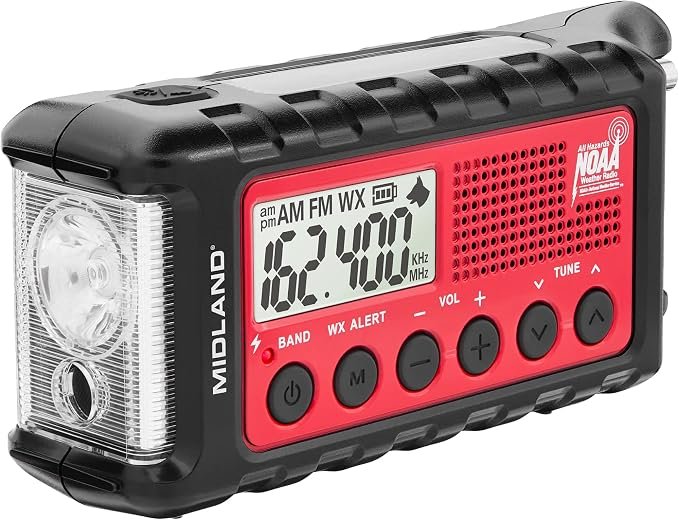
Midland ER310 Emergency Radio
Low-energy official alert layer
A dedicated alert and information source consumes far less energy than leaving a television or computer running during an outage.
View product →Outdoor Tech Index may earn a commission when you buy through links on this page. This does not affect the price you pay.
Maintenance schedule
- Check state of charge monthly and follow the manufacturer’s storage-charge guidance.
- Run a complete outage drill at least twice a year and after changing any critical appliance.
- Inspect cables, plugs, solar connectors, vents, cases, and batteries for wear, heat damage, or swelling.
- Re-measure refrigerator or pump energy seasonally when ambient temperature changes demand.
- Update firmware only when the system can be re-tested before it is relied upon.
Common mistakes
- Sizing from appliance nameplate watts alone instead of measured watt-hours and startup behavior.
- Using the advertised battery capacity as fully deliverable AC energy with no loss or reserve.
- Buying solar panels before checking the station’s input voltage, current, connector, and watt limit.
- Attempting to backfeed home wiring through an outlet or improvised cable.
- Expecting a portable 1 kWh-class station to run electric space heat, cooking, or whole-house HVAC for long.
- Never testing the full transfer routine with everyone who may use it.
Frequently asked questions
+How large a power station do I need for a refrigerator?
Measure the refrigerator over a representative 24-hour period and confirm compressor startup surge. Models, room temperature, door opening, and age vary too much for one universal battery size.
+Can I plug the power station into a wall outlet?
No. That can backfeed building wiring and endanger people and equipment. Power loads directly, or use a listed transfer solution designed and installed for the purpose by a qualified professional.
+How much solar do I need?
Start with daily watt-hours that must be replaced, then use location and season-specific solar estimates. The station’s allowable input and the site’s real shade can be more limiting than panel nameplate watts.
+Should I buy two smaller batteries or one large one?
Two units can provide redundancy and easier carrying, while one larger system may share energy and inverter capacity more efficiently. Decide based on whether loads can be split and whether either unit alone can start the highest-priority motor load.
Primary sources
This is a research-based system guide, not a report of hands-on testing. Product specifications and regulations can change; confirm current documentation and local requirements before buying or installing.