
Homesteading & Off-Grid Living: Prepare Before the Window Closes
AI-driven job destruction, brittle supply chains, rising costs, payment outages, and failing utilities can turn an ordinary household problem into a crisis with very little warning. Build the essentials now—while income, inventory, and time are still available.
Outdoor Tech Index Editorial Team · Updated August 17, 2026 · 20-minute read
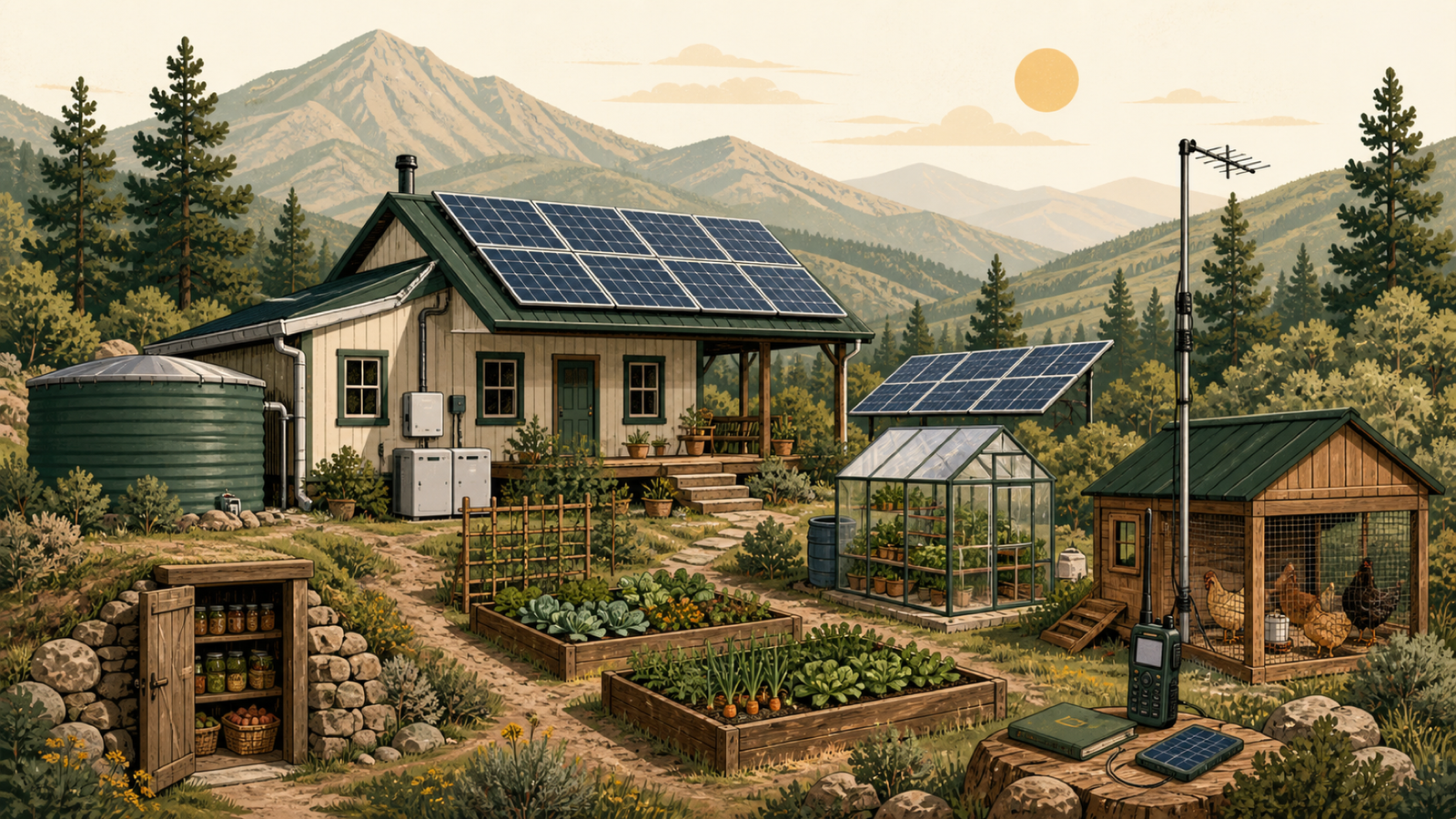
The warning may come after the damage has already started
AI is being deployed at a speed that can erase jobs, reduce entry-level opportunities, suppress wages, and concentrate decision-making before communities have time to adapt. A company does not need to replace every worker to destabilize a town. It only needs to cut enough payroll, delay enough hiring, and force enough households to reduce spending.
That pressure can spread quickly. Missed paychecks become missed payments. Local businesses lose customers. Credit tightens. Repairs are postponed. Tax revenue falls. Services weaken just as more people need them. If several of those failures arrive together, the economy can deteriorate faster than a household can build savings, learn food production, install water storage, or assemble backup power.
The next few years are a dangerous window because the change is already underway and there may be no clean starting signal. You may not receive a final warning before a layoff, bank interruption, regional shortage, extended outage, or sharp price jump. Waiting until the threat feels undeniable means competing for the same supplies after everyone else has noticed.
Preparation has to begin before fear becomes panic. Savings require repeated deposits. Gardens fail before they succeed. Batteries, pumps, filters, radios, and generators reveal weaknesses only when tested. Every month of delay leaves another dependency untouched.
The objective
Make sure one failed paycheck, payment network, utility, supplier, device, or communication path cannot immediately control your family’s next decision.
Eight layers that keep one failure from becoming a collapse
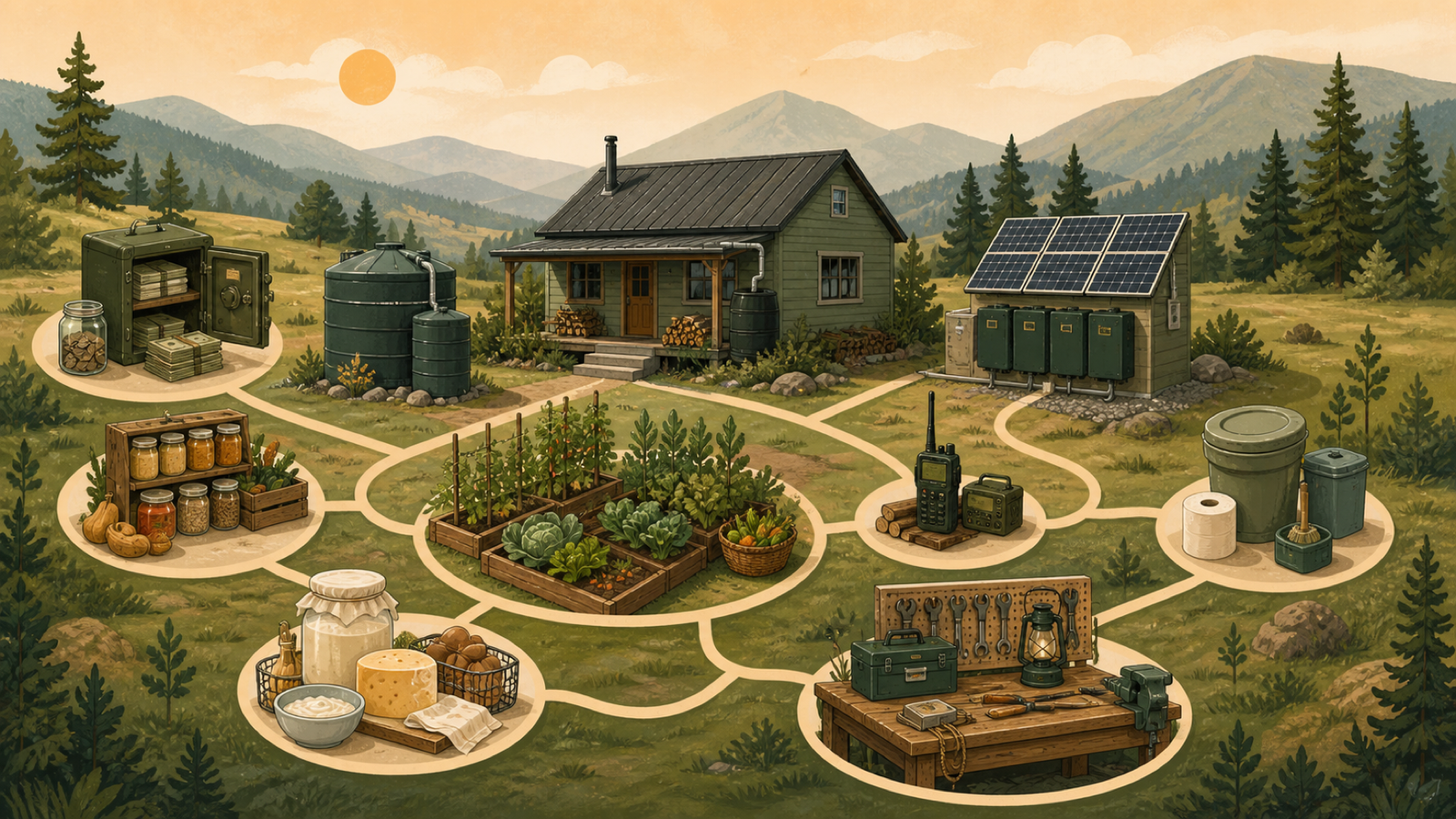
Off-grid living is not one product and homesteading is not one skill. Water supports sanitation and food. Power moves water and preserves medicine. Money buys time when equipment fails. Communications bring information and outside help. Repair skills keep every other layer alive.
Build the layers in order of consequence. Anything that can threaten life or force an immediate evacuation comes before comfort, convenience, or impressive equipment.
| Layer | Start here | Build toward | Dangerous mistake |
|---|---|---|---|
| Money | Emergency savings and physical cash | Months of expenses plus a measured gold-and-silver reserve | Assuming every account, card, and payment network will always work |
| Water | Three days of drinking water | Two weeks stored, treatment options, and a renewable source | Owning a tank without a safe collection, treatment, or rotation plan |
| Food | Two weeks of food you already eat | Rotating pantry, preservation, garden, and local producers | Random bulk food with no menu, cooking fuel, water, or rotation |
| Power | Lighting, charging, and measured critical loads | Battery storage, solar recharge, and a safe backup path | Buying from marketing claims instead of measured watt-hours and surge |
| Communications | Paper contacts, meeting places, and charged radios | Local voice plus an independent long-distance path | Depending on one phone, carrier, app, tower, or charger |
| Health & sanitation | Medicines, first aid, hygiene, and waste plan | Redundant sanitation and temperature control | Waiting until water or sewer service stops to improvise |
| Food production | One growing bed and a full season of practice | Soil, seed, irrigation, storage, preservation, and livestock | Assuming a first-year garden can replace the grocery store |
| Repair capacity | Basic tools, manuals, protection, and consumables | Critical spares, diagnostics, practiced repairs, and skilled neighbors | Owning complex systems nobody in the household can service |
Define the disruption before it defines your choices
A vague fear produces random purchases. A written failure timeline exposes what will actually break first.
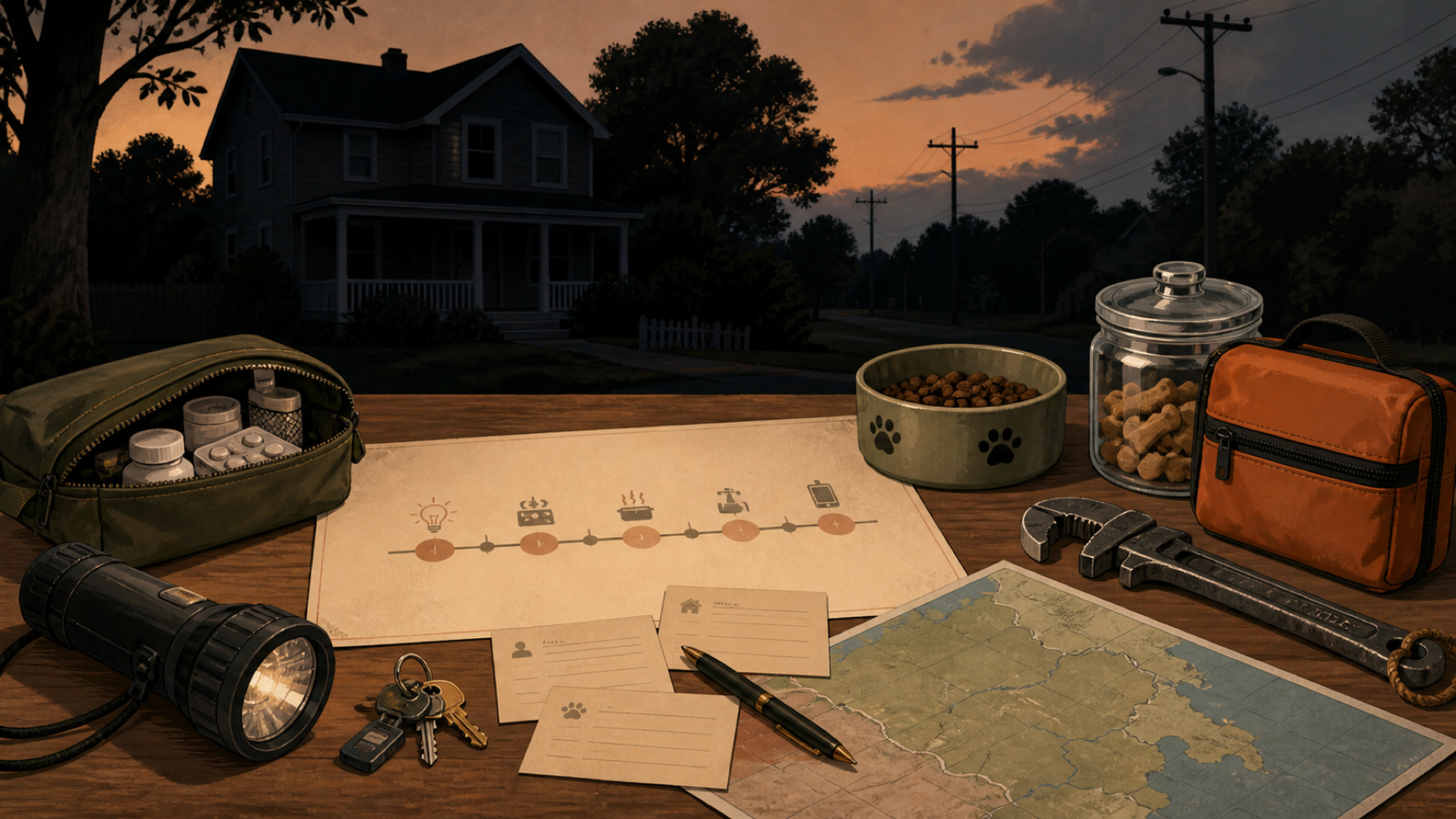
Write four scenarios: a three-day utility outage, a two-week regional disruption, a one-to-three-month income interruption, and a longer period of high prices or unreliable services. Add hazards specific to your location, season, household, animals, and medical needs.
For each scenario, list what stops working after 4 hours, 24 hours, 3 days, and 2 weeks. Decide what would force you to stay, leave, or ask for help. If the decision is not made in advance, fear, darkness, exhaustion, and missing information will make it for you.
- ✓Put household and out-of-area contacts on paper
- ✓List prescriptions, medical loads, pet needs, and mobility requirements
- ✓Copy identification, insurance, warranties, and serial numbers
- ✓Map water, gas, and electrical shutoffs
- ✓Choose two meeting places and two exit routes
- ✓Set a cash budget so preparation does not create dangerous debt
Build financial runway before the next paycheck disappears
Digital balances, physical cash, gold, and silver solve different problems. Depending on only one leaves a single point of failure.

Start by calculating the absolute minimum monthly cost of housing, food, medicine, utilities, transport, and insurance. The first target is one month of essentials. Build toward several months while reducing recurring expenses and high-interest debt that can turn a temporary income loss into repossession, foreclosure, or forced liquidation.
Keep physical cash. Card networks, banking apps, ATMs, and power can fail at the same time. It is commonly suggested that households keep a modest reserve in small bills for fuel, food, medicine, transport, and urgent repairs. Divide it between secure locations, protect it from fire and water, and never reveal the storage plan casually.
Keep a measured reserve of physical gold and silver. Cash is useful during a short outage but can lose purchasing power over time. Recognizable bullion can hold a portion of savings outside digital accounts and payment systems. Favor widely recognized, easy-to-verify forms over rare collectibles. Understand dealer spreads, price swings, theft risk, secure storage, and how you would sell or trade it before buying.
Do not turn metals into a new vulnerability. Water, food, medicine, repairs, insurance, and manageable debt come first. Then build the physical reserve gradually, keep accurate private records, avoid leverage, and make sure another trusted adult can access essential funds if you are injured or away.
- ✓Calculate the household’s minimum monthly survival cost
- ✓Build one month of accessible expenses, then keep extending it
- ✓Keep small-denomination physical cash for network outages
- ✓Add recognizable gold and silver gradually, without borrowing
- ✓Use concealed, fire- and water-resistant storage
- ✓Reduce subscriptions, fragile debt, and unnecessary fixed costs
Secure water before the taps become uncertain
Without water, every other plan starts collapsing within days. Storage comes before complicated collection systems.
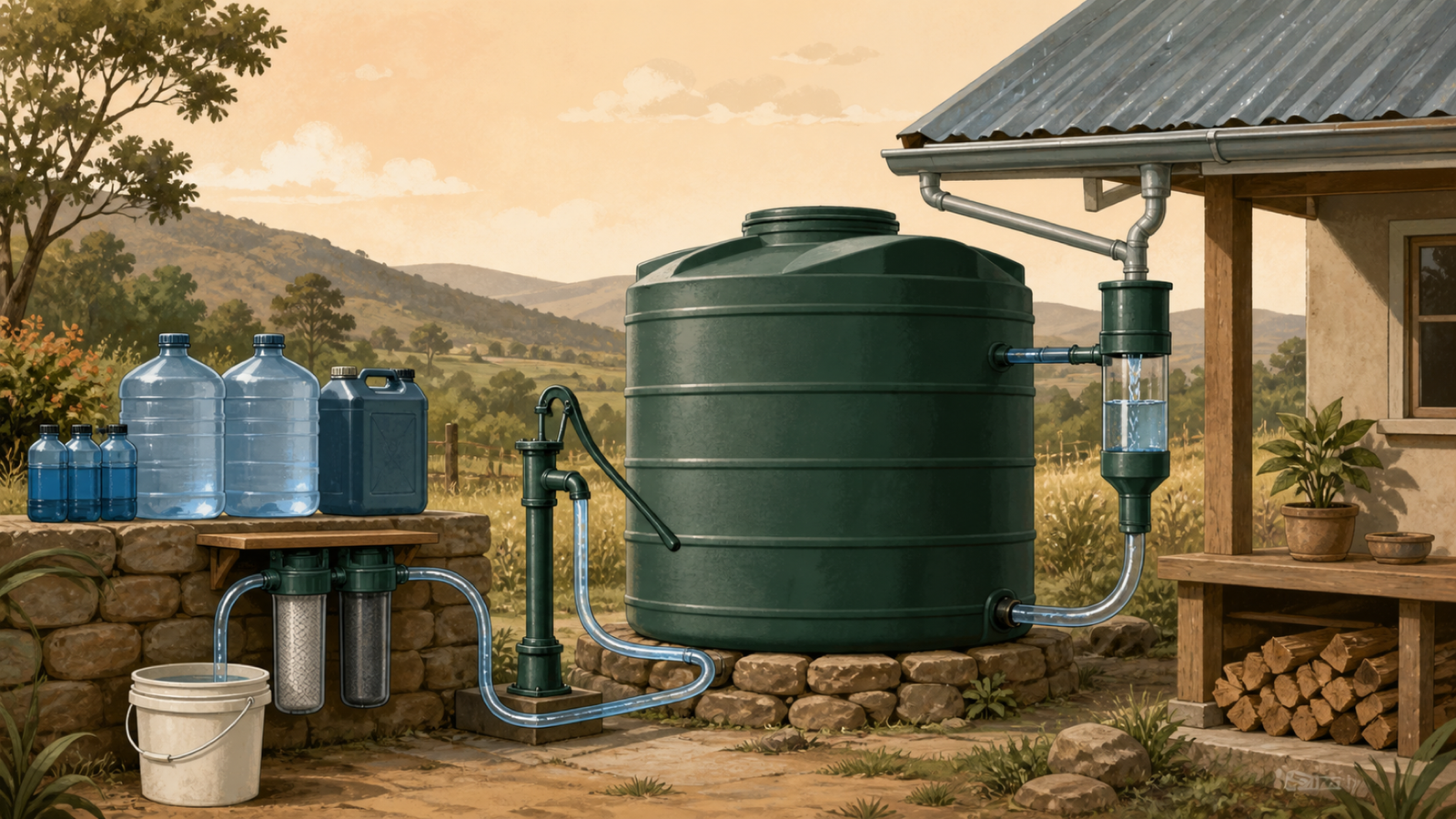
It is commonly suggested that households begin with at least one gallon per person per day for drinking and basic food preparation, then work toward two weeks. Add more for heat, illness, pregnancy, pets, hygiene, and medical equipment. A four-person household reaches 56 gallons at one gallon per person for fourteen days.
Use containers designed for water, label the fill date, keep them away from fuel and chemicals, and protect them from heat and sunlight. Store water in more than one container so a leak or contamination event does not destroy the entire reserve.
Build a treatment chain instead of trusting a single gadget: settle or prefilter dirty water, filter for the actual source, disinfect when needed, and store treated water in a clean container. Rain capture, wells, ponds, and streams can contain biological or chemical hazards that an ordinary camping filter may not remove. Test the source and design the treatment around what is actually present.
- ✓Store three days immediately, then expand toward two weeks
- ✓Split water among several sealed containers
- ✓Own a manual transfer method if pumps lose power
- ✓Keep replacement filters, seals, and treatment supplies
- ✓Separate drinking-water equipment from irrigation equipment
- ✓Practice producing a full day of safe water before an emergency
Build food depth before shelves thin out
A working pantry is food you already eat, fuel you can still use, and a rotation system that prevents quiet waste.
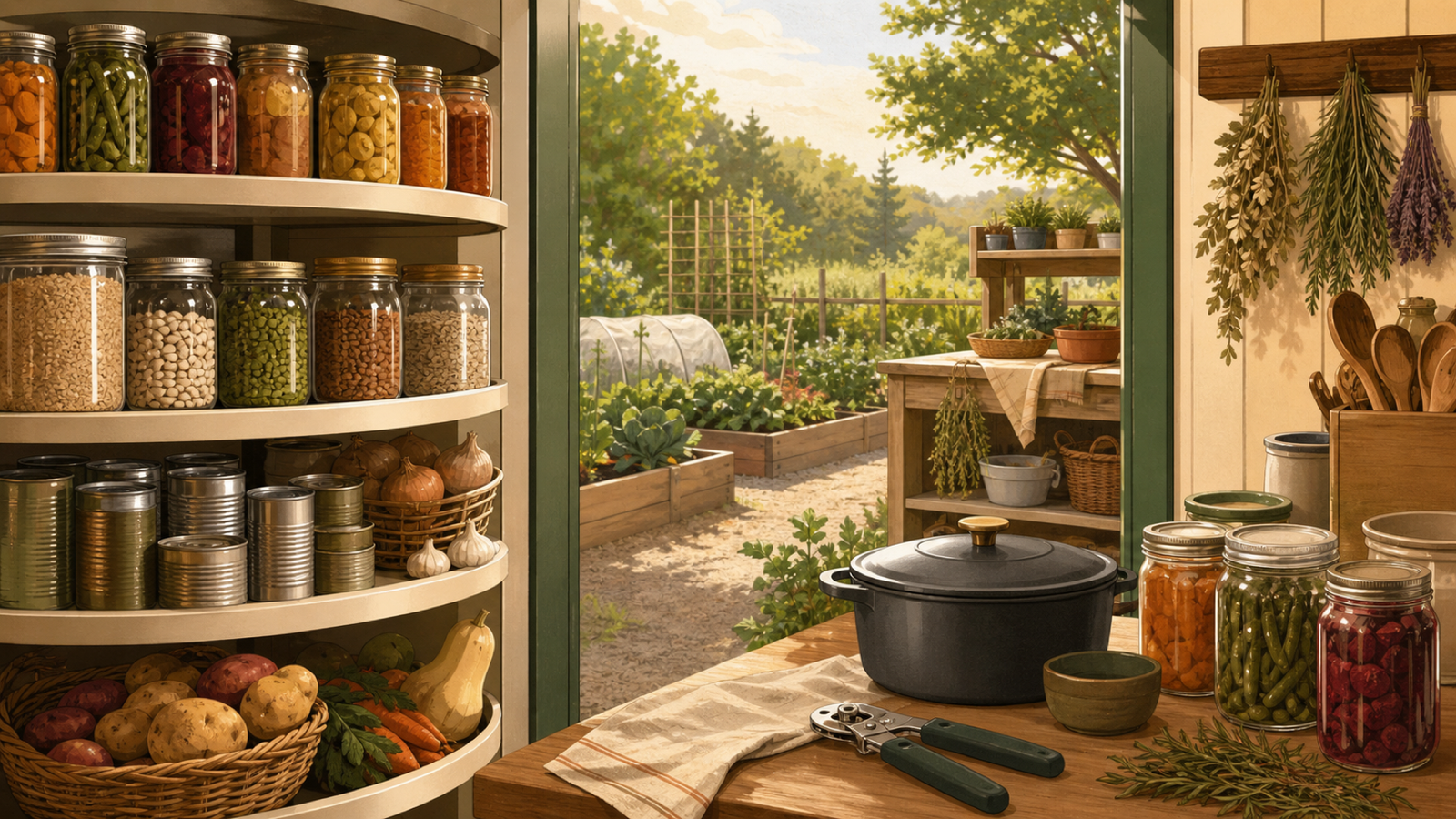
Begin with seven days of ordinary meals, then fourteen, then thirty. Buy one extra unit of shelf-stable food during normal shopping and move older items forward. Write complete outage menus so you know the required water, cooking fuel, opener, cookware, and cleanup supplies.
Protect cold food before expanding storage. A closed refrigerator or freezer only buys limited time. Keep appliance thermometers, frozen water containers, coolers, and a written order for what gets eaten first. If backup power cannot sustain refrigeration, have a plan to cook, share, preserve, or discard food before uncertainty becomes illness.
Deep storage without rotation becomes expensive trash. Record dates, inspect for moisture and pests, and store only food the household can prepare under reduced water and power. Add dehydrating, canning, fermenting, root-cellar storage, or freezing one skill at a time and practice during ordinary weeks.
- ✓Write seven outage meals using food already in the house
- ✓Grow the rotating pantry toward 30 days
- ✓Store the water and fuel needed to cook the food
- ✓Keep manual openers, simple cookware, and cleanup supplies
- ✓Track dates and inspect monthly for pests or moisture
- ✓Build relationships with nearby growers and producers now
Back up essential power before darkness exposes the gaps
Measure survival loads first. A smaller system that is understood and tested is safer than a large battery bought from advertising.
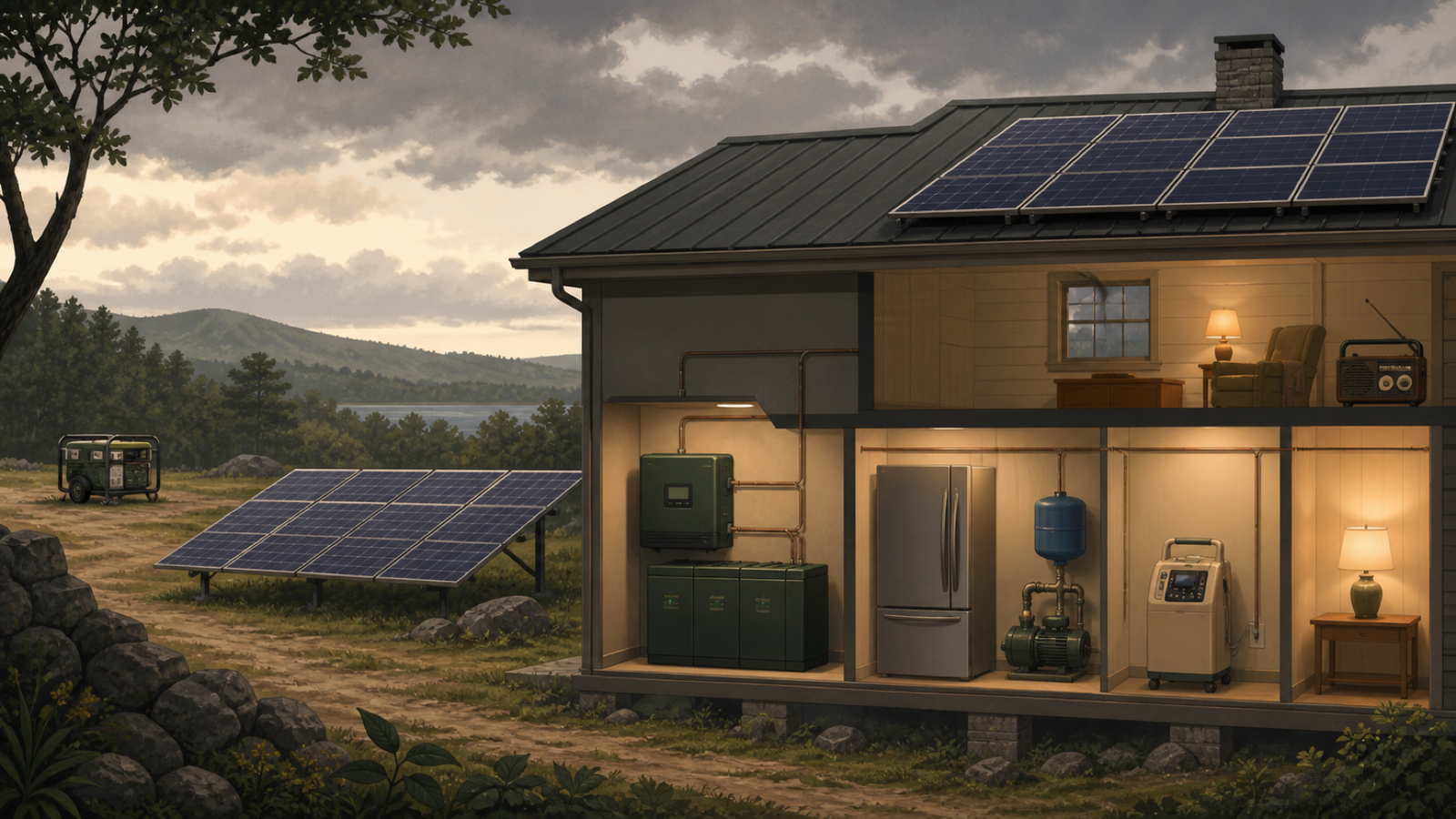
Make a critical-load list: medical equipment, refrigeration, well or transfer pumps, communications, lighting, heat controls, ventilation, and limited device charging. Record running watts, startup surge, and hours per day. Convert that into daily watt-hours and add a margin for cold weather, aging batteries, and conversion loss.
Do not assume rooftop solar works when the grid fails. Many systems stop unless they are configured to operate independently with compatible controls and storage. Confirm the actual outage behavior before depending on it.
Solar and batteries reduce dependence on fuel deliveries, but weather can restrict charging for days. Generators can carry large loads and recharge batteries, but they add fuel storage, noise, maintenance, fire risk, and deadly exhaust. Operate combustion equipment outdoors, far from openings, and install working carbon-monoxide alarms before the first test.
- ✓Measure critical loads with a plug-in meter or equipment label
- ✓Calculate daily watt-hours and starting surge
- ✓Prioritize medical loads, pumps, refrigeration, lights, and communications
- ✓Test solar recharge in the weakest season
- ✓Store the correct cables, fuses, connectors, and spare charging paths
- ✓Run a safe evening outage drill before trusting the system
Protect sanitation, shelter, and health before conditions deteriorate
When water, sewer, temperature control, or medicine storage fails, a comfortable house can become unsafe quickly.
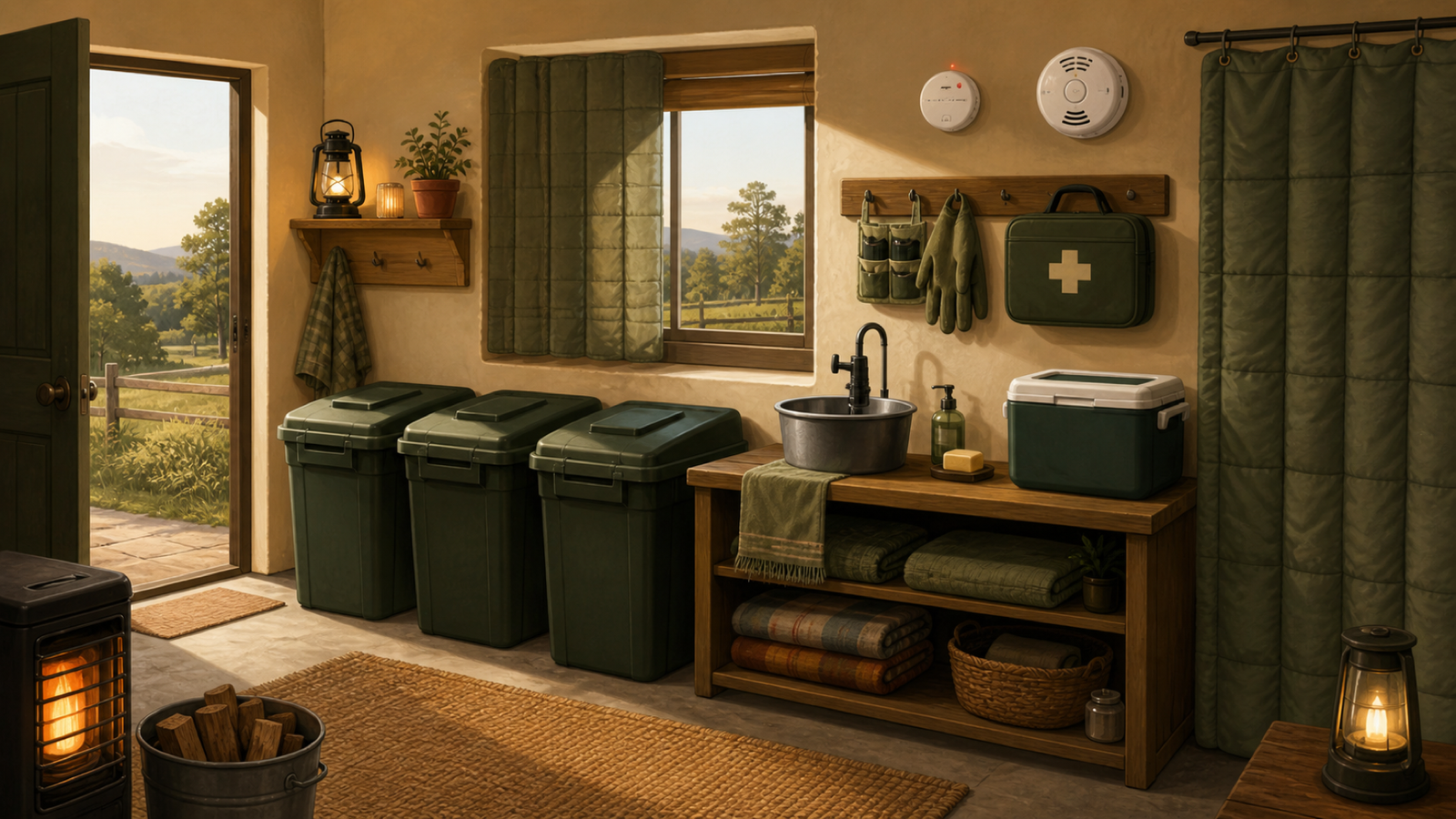
Store soap, sanitizer, gloves, heavy bags, toilet paper, menstrual supplies, diapers where needed, cleaning concentrate, buckets, and a covered waste plan. Learn in advance how the household will manage toilet waste if water or sewer service stops. Keep waste and wash water away from living areas and water sources.
Choose one room that can remain safe during heat or cold. Improve insulation, shade, curtains, ventilation, bedding, and safe backup heat before buying more electronics. Keep smoke and carbon-monoxide alarms active. Never improvise indoor combustion for heat or cooking.
Maintain prescriptions, first aid, spare glasses, health records, mobility supplies, and a temperature plan for sensitive medicine. Skills matter as much as inventory: household members should know bleeding control, burns, wound cleaning, choking response, shutoffs, and when a situation is beyond home care.
Layer communications before the network goes silent
One phone and one carrier are not a plan. Build local coordination and an outside-area path, then test both.

Print contacts, addresses, meeting locations, check-in times, routes, and simple instructions. Keep charged phones, labeled cables, power banks, and a battery radio. Memorize at least one out-of-area contact who can relay information when local networks are congested.
Add local two-way voice only after the household has a channel plan and practices using it. Some radio services require licensing, so check the current rules where you live without waiting until an emergency. Terrain, buildings, antenna position, power, and repeaters affect range far more than package claims.
For travel or remote property, a satellite messenger can provide another route, but it may require a paid plan, charged battery, updated contacts, clear sky, and periodic tests. No communication device guarantees rescue. Every layer needs a fallback meeting point and a time-based plan.
- ✓Print contacts, routes, meeting places, and check-in times
- ✓Store charging cables and a labeled power bank
- ✓Choose one local voice channel and one backup
- ✓Test radios from the actual home, vehicle, and property
- ✓Keep one route to someone outside the affected area
- ✓Repeat the communication drill until every household member can do it
Build repair capacity before a minor failure disables the system
Equipment without tools, spares, diagrams, and practiced hands becomes dead weight when replacements are unavailable.
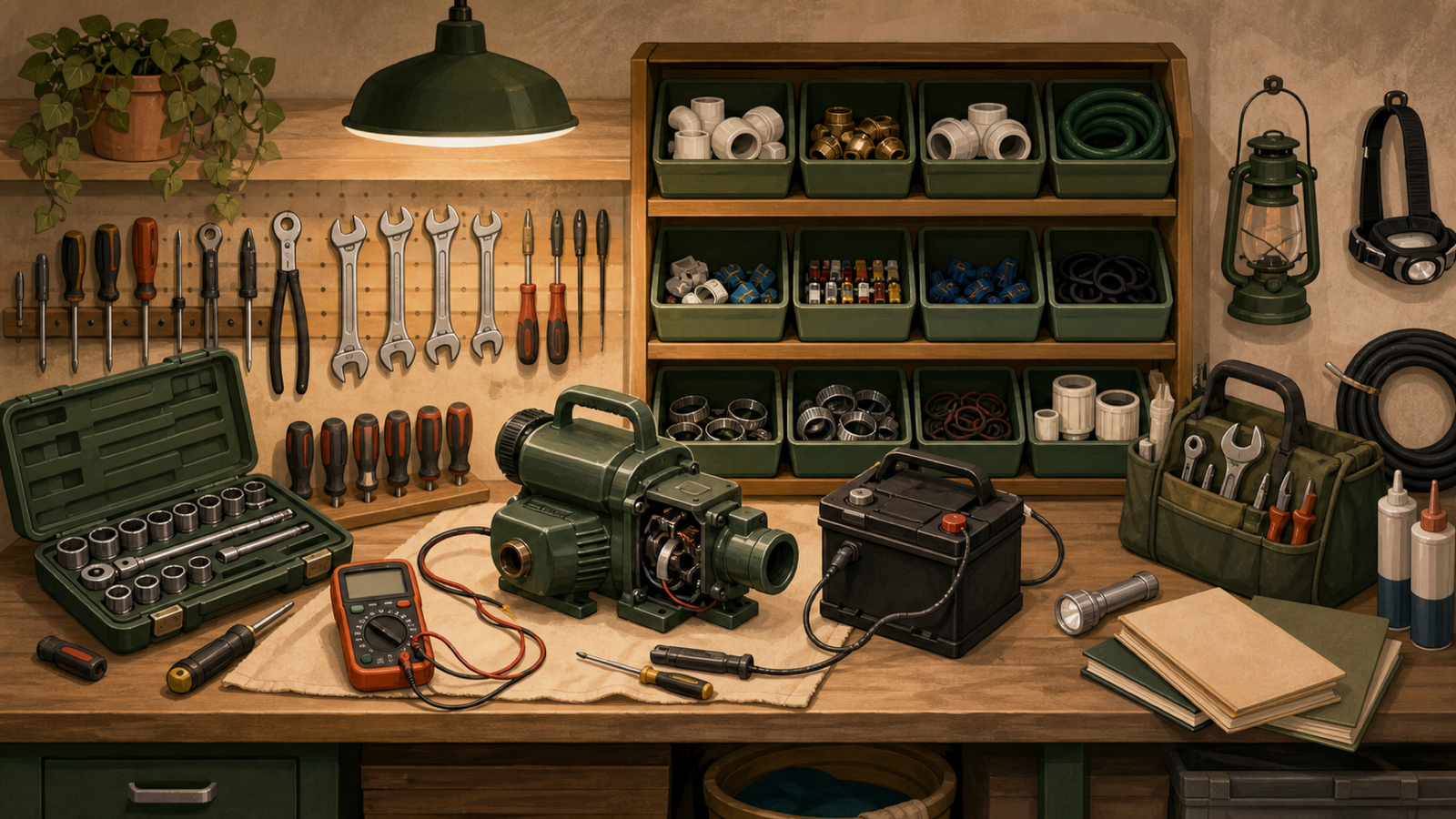
Build a tool kit around the systems you actually maintain: correctly sized wrenches, pliers, screwdrivers, sockets, utility knife, multimeter, headlamps, gloves, eye protection, buckets, hose repair, fasteners, sealants, tape, fuses, and manufacturer-specified consumables. Label shutoffs, circuits, valves, chargers, and bins.
Print critical manuals, wiring diagrams, and plumbing diagrams. Keep serial numbers and warranty records offline. Stock failure-prone, inexpensive parts after observing the system: filters, O-rings, pump strainers, fuses, connectors, lubricants, batteries, repair couplings, and belts.
A skilled neighbor can be more valuable than a duplicate gadget. Build trusted relationships with people who understand electrical work, engines, plumbing, welding, gardening, animal care, and first aid. Isolation multiplies small failures; mutual aid gives the household options.
Produce more at home before scarcity forces the lesson
Food production takes seasons of failure, observation, and adjustment. The first garden cannot be started after the shelves are empty.
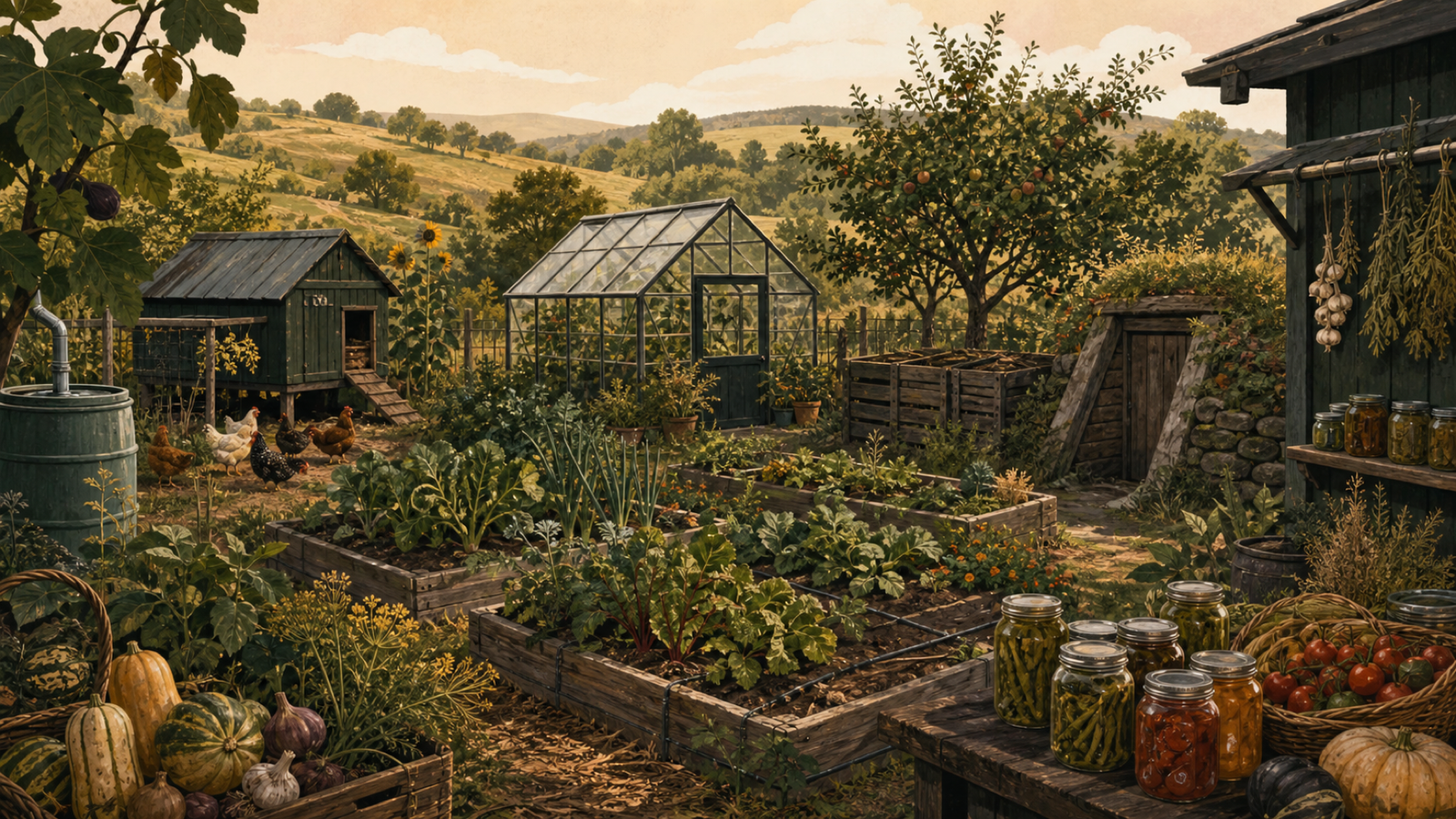
Start with one growing bed and carry it through a full season. Improve soil, make compost, save appropriate seed, install efficient irrigation, plant perennials, and learn season extension. Record what failed, what pests arrived, when water ran short, and what the household actually ate.
Add livestock only after fencing, predator protection, feed storage, water, shelter, daily care, processing, and backup caretakers are solved. Animals create a continuous obligation and can increase dependence if every pound of feed still comes from a distant supplier.
Preservation is part of production. A harvest that rots in a week does not create security. Learn drying, canning, fermenting, freezing, curing, cool storage, and seed saving in small batches before a large crop depends on those skills.
Use the next 30, 90, and 365 days before conditions choose the schedule

First 30 days
Stop being one outage away from panic
Write the risk and communication plans. Store three days of water and two weeks of familiar food. Organize medicine, hygiene, lighting, charging, documents, physical cash, first aid, and alarms. Begin the emergency fund and complete one evening outage drill.
Days 31–90
Remove the largest single points of failure
Grow water toward two weeks. Measure critical electrical loads. Add a right-sized backup-power plan. Establish local radio and an outside-area contact. Start a small garden, pantry rotation, repair kit, and gradual physical gold-and-silver reserve.
Months 4–12
Build renewable capacity while supplies are available
Add solar recharge, rain capture, expanded growing, preservation, protected storage, stronger communications, or livestock only where the budget and maintenance plan support them. Extend savings, reduce fixed costs, stock critical spares, and run seasonal drills.
A neglected preparedness system fails exactly when it is needed
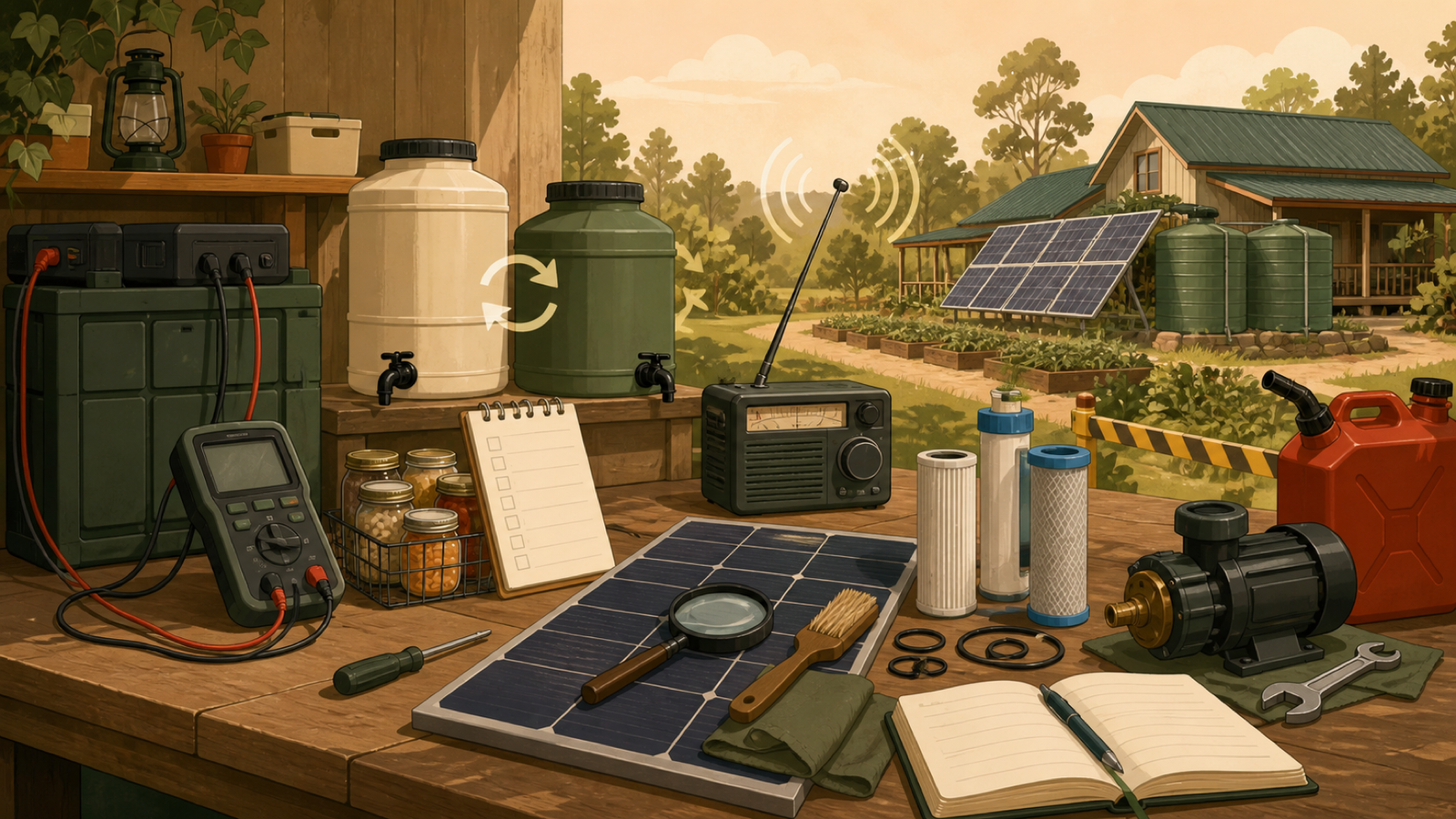
Batteries discharge. Stored water ages. Filters clog. Food expires. Seals crack. Fuel degrades. Subscriptions lapse. Phone numbers change. Animals change routines. People forget procedures. A system that has not been tested is an assumption, not protection.
Once a month, review cash flow, charge devices, rotate pantry items, inspect for leaks, and test alarms. Twice a year, replace self-filled stored water, run an outage and communications drill, review routes and records, and inspect solar equipment, tanks, pumps, filters, wiring, and critical spares.
Run a controlled 24-hour test in safe weather. Do not interrupt essential medical or safety equipment. Record every missing cable, confusing control, weak signal, spoiled item, security problem, and unrealistic assumption. Fix the list before adding anything new.
Monthly
- Review savings, cash, and essential expenses
- Charge phones, radios, and battery systems
- Use and replace pantry items
- Inspect for leaks, pests, and physical damage
Twice yearly
- Replace self-filled stored water
- Run an outage and communication drill
- Review routes, records, medicine, and contacts
- Inspect power, pumps, filters, wiring, and spares
Every system built now removes leverage from the next crisis
Questions people ask before they start
+Is an AI-driven economic collapse guaranteed?
No one can honestly guarantee a date or outcome. The danger is that households may get little warning before layoffs, reduced hours, tighter credit, falling demand, business closures, and strained local services begin feeding into one another. Waiting for certainty means starting after prices rise, income disappears, or essential equipment becomes difficult to find.
+Do I need rural land to become more resilient?
No. An apartment or suburban household can store water and food, keep physical cash, own compact backup power, maintain paper records, learn repair skills, and build relationships with nearby producers. Land expands production, but it does not replace planning, security, maintenance, or financial margin.
+What should I secure first?
Close the failure points that become dangerous fastest: prescriptions, drinking water, familiar food, sanitation, lighting, phone charging, physical cash, and a way to receive or send information without relying on one network. Measure electrical loads before buying a large battery or solar system.
+Should all of my emergency money be cash or precious metals?
No. Each form solves a different problem. Accessible savings can handle normal bills, physical cash can work during short payment outages, and recognizable physical gold or silver can preserve a portion of wealth outside digital systems. Keep the mix practical, secure it carefully, and never buy metals instead of water, food, medicine, insurance, debt reduction, or immediate repairs.
+How much solar do I need?
List every critical load, record its watts and daily run time, calculate daily watt-hours, include conversion loss and starting surge, then size storage and recharge for the darkest realistic season. Ordinary grid-connected panels may be unavailable during an outage unless the system can safely operate independently.
+Can rainwater be my drinking-water source?
Only after the collection surface, storage, treatment, testing, maintenance, and plumbing separation have been designed for that use. Beginners should treat stored drinking water as the first layer and introduce rain capture for irrigation or other non-drinking uses while a safe potable system is developed.