Garmin inReach Messenger Plus
Garmin · satellite
$299–$400
Direct merchant link. No affiliate tracking is currently configured.
Research-based guide. Outdoor Tech Index has not hands-on tested this product.
Quick overview
Remote travelers and property operators who prioritize two-way satellite communication, SOS, long battery life, and photo or voice context over onboard mapping
Potential advantages
- Photo and voice messages can add context that a short text cannot convey
- Long battery rating and compact 3.1 by 2.5 by 0.9 inch body
- Can send basic messages and SOS from the device when a phone is unavailable
- Works with Garmin Messenger, Garmin Explore, and selected ANT+ remote devices
Potential limitations
- Satellite communication requires an inReach plan and may incur usage charges
- The small monochrome display is not an onboard map and text entry is limited
- Photo, voice, long-text, and convenient composition depend heavily on a paired phone
- Trees, terrain, buildings, device orientation, and message mode affect delivery and battery life
What we think
The inReach Messenger Plus is a communications-first device, not a mapping handheld. Its strongest case is the combination of compact hardware, an SOS control and basic messaging that remain on the device, plus richer 1,600-character text, photo, and voice communication through the paired Garmin Messenger app. Current sale pricing makes it more attractive than its launch price, but service is part of the product. The right comparison includes activation, monthly plan, expected message volume, tracking intervals, phone dependence, and how often the unit will be suspended or carried.
Verdict: choose it for context-rich communication, not maps
The inReach Messenger Plus is the best fit for people who may need to explain a remote problem, share a photo, send a voice update, or coordinate changing plans outside cellular coverage. A picture of an injury, a washed-out road, equipment damage, or current conditions can carry more information than a short text. The device also retains a protected SOS control, location functions, and basic messaging without making the phone the only emergency interface.
Skip it if the actual need is turn-by-turn navigation on a handheld screen. The small monochrome display is readable, but there are no onboard maps. Garmin Explore on a compatible phone handles the richer map workflow. Also skip it if a current phone's limited satellite features fully cover the intended route and communication pattern, or if the recurring plan cost will lead you to leave the dedicated device at home. Safety equipment only helps when it is charged, activated, carried, and practiced.
Current price, plans, and first-year cost
On August 19, 2026, REI listed the Messenger Plus at $299.99 against a regular price of $400. Garmin and other sellers can change promotions, so $299 to $400 is a more honest current buying range than the original $499.99 launch price still quoted in older reviews. The commercial button on this page goes directly to Garmin and does not contain an affiliate tag.
Current Garmin US consumer-plan information spans Enabled, Essential, Standard, and Premium tiers. Garmin support materials list the Enabled tier at $7.99 per month, with consumer tiers reaching $59.99 per month, and a $39.99 activation fee can apply. Included message, photo, voice, weather, and tracking allowances differ by tier, and overage charges matter. At the low end, a $299.99 device plus activation and twelve Enabled months is about $435.86 before usage charges or tax. At the high end, the same hardware plus twelve Premium months is about $1,059.86. Check the live plan table because pricing and suspend rules can change.
What works without a phone and what does not
The device itself can initiate SOS, send check-in or preset content, handle short text interaction, show status, start tracking, and run TracBack. That independence matters if the paired phone is broken, wet, cold, or discharged. However, the Plus earns its price when paired with the Garmin Messenger app. The phone supplies a normal keyboard and the interface for 1,600-character text, photo, and voice messaging. Garmin Explore adds course, waypoint, activity, and map tools.
Plan for both layers. Download and update both apps before travel, pair and sync at home, make sure recipients understand how replies arrive, and preserve enough phone power for the richer workflow. The Messenger Plus can reverse-charge another device, but independent testing notes that this is an emergency top-up, not a full phone-charging strategy, and it consumes the communicator's own reserve. Carry a separate power bank when the phone is operationally important.
Battery, satellite view, and real-world delivery
Garmin rates the unit for up to 25 days in low-power messaging mode with a 10-minute tracking interval, up to 120 hours with a two-minute interval in low-power mode, and about 70 hours in performance messaging mode. Those figures assume a useful sky view. Dense tree cover, canyon walls, buildings, frequent tracking, repeated send attempts, cold, backlight use, media transfers, and reverse charging can reduce runtime. A credible independent six-week review reported 20 days in one mixed-use pattern, but that result belongs to the tester's conditions and should not be treated as a guarantee.
Mount or carry the device where its antenna can see the sky, not buried under metal equipment or deep in a pack. When a message matters, stop, orient the unit as directed, wait for a clear confirmation, and do not assume the speed of a cellular text. Build communication plans around delays. State who should receive a check-in, how long they should wait, what a missed check-in means, and when they should escalate.
SOS is a process, not a rescue guarantee
An inReach SOS starts an interactive exchange through Garmin Response when the device is activated on a supported service. It can communicate location and details, and the Plus can add media context through the app. It cannot guarantee that local responders exist, that weather allows access, that a rescue is free, or that every jurisdiction permits the device. Garmin and REI both tell users to understand local restrictions.
Before depending on it, complete Garmin's device test outside with a clear sky view, verify emergency contacts, and practice reaching the SOS control without actually triggering an emergency. Teach companions how to use it if the owner is incapacitated. Keep the unit physically attached to a person or immediately reachable, not in a vehicle or pack separated from the group. A satellite communicator supplements route planning, weather judgment, first aid, shelter, water, navigation, and a trip plan left with a responsible contact.
Durability, care, and common failure modes
The Messenger Plus measures 3.1 by 2.5 by 0.9 inches, weighs 4.1 ounces, and carries an IPX7 rating. Garmin defines that as accidental immersion in one meter of water for up to 30 minutes. It is not a license for prolonged submersion, high-pressure washing, or charging while wet. Garmin instructs users to dry the device before charging and rinse it with fresh water after salt or chlorinated exposure.
Common operational failures are more likely to be unglamorous: an expired or wrong plan, a phone that was never paired, an old firmware version, an empty battery, a message sent from a poor sky view, recipients who ignore an unfamiliar message, or a device left in the vehicle. Create a departure checklist that includes charge, plan status, test message, app login, contact confirmation, cable, power bank, physical tether, and a paper backup of the trip plan. Rehearse without cell service so the first satellite workflow is not an emergency.
Alternatives and decision guidance
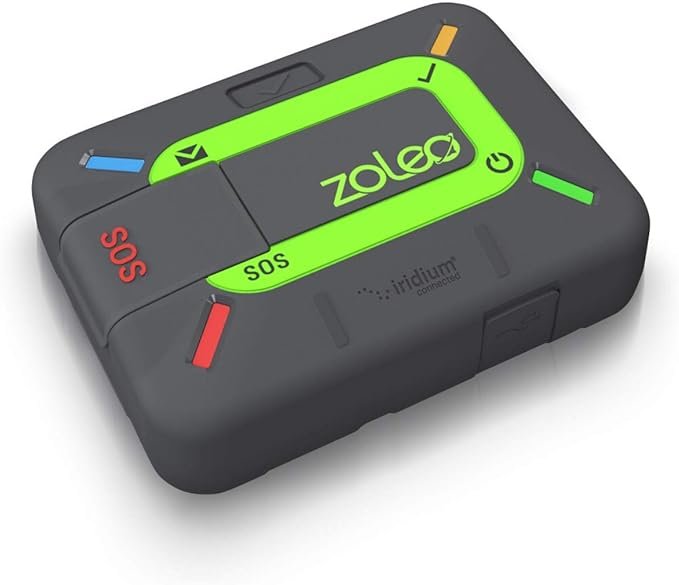
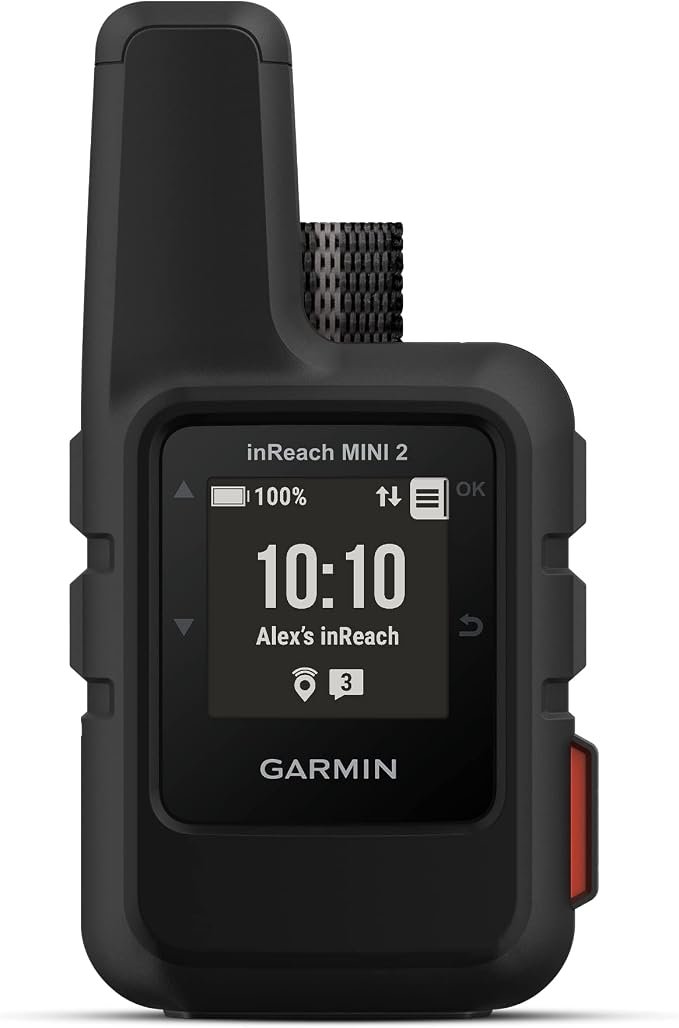
The existing Garmin inReach Mini 2 page is the closest in-brand alternative for buyers who value a taller handheld form and basic navigation cues without paying for photo and voice messaging. ZOLEO is a strong lower-hardware-cost alternative with a dedicated communication identity and a phone-centric interface, but its service model and cancellation or suspension details differ. A newer inReach Mini 3 Plus adds a color touchscreen and richer device interaction, while the plain inReach Messenger remains a less expensive text-first option.
Choose Messenger Plus when photo or voice context is likely to change decisions, long low-power runtime matters, and phone-assisted composition is acceptable. Choose a map-oriented handheld when navigation is the core task. Choose a simpler messenger when check-ins, short texts, and SOS cover the actual plan. Compare the complete first-year cost, included messages, overages, suspend behavior, international restrictions, device-only capability, app dependence, battery mode, and the satellite network instead of comparing hardware price alone.
Key features
Two-way satellite text plus photo and voice messages through the Garmin Messenger app
Interactive SOS routed through Garmin Response with an active supported service
Iridium satellite network, GPS location sharing, weather, and TracBack
Up to 1,600-character messages and 30-second voice messages
IPX7 water rating, 4.1-ounce weight, and USB-C charging
Manufacturer-rated battery life up to 25 days in low-power messaging with 10-minute tracking
Quick Facts
Who It's For
Remote travelers and property operators who prioritize two-way satellite communication, SOS, long battery life, and photo or voice context over onboard mapping
Who Should Skip It
Anyone for whom this is a dealbreaker: satellite communication requires an inReach plan and may incur usage charges
How to get started
The Messenger Plus is one layer in a remote-communication plan. Service status, apps, recipients, message rules, power, sky view, navigation, first aid, and a responsible contact at home must work together before the satellite link is useful.
1. Select the plan from actual message use
Count planned check-ins, tracking points, weather requests, ordinary texts, and possible photo or voice messages. Compare included quantities and overage charges on Garmin's live table. Confirm activation, billing, and any suspend state several days before departure.
2. Pair, update, and sync at home
Charge the device, update firmware, install Garmin Messenger and Garmin Explore, pair the phone, sync contacts and routes, and download offline maps. Log out and back in if needed now, while normal internet and account recovery are available.
3. Test the complete recipient loop
Use Garmin's supported test process outdoors, then send a normal message from a safe location with a clear sky view. Have the recipient reply and confirm they recognize the sender, map link, and response method. Agree on short phrases that communicate status without ambiguity.
4. Rehearse device-only operation
Put the phone away and practice opening messages, sending a check-in, starting and stopping tracking, finding TracBack, and locating the protected SOS control without activating it. Teach a companion, because the device owner may be the person who needs help.
5. Set battery and carrying rules
Choose low-power or performance messaging deliberately, set a tracking interval that serves the plan, and record expected charge checkpoints. Carry the unit high with useful sky view and tether it to a person. Keep the USB-C cable and power bank dry and accessible.
6. Run a no-cell drill
Disable cellular and Wi-Fi service in a safe place, complete a satellite message exchange, inspect delivery status, and observe how long it takes. Review what happens after a missed check-in. The drill should end with a written, shared rule for escalation rather than a vague promise to check in.
Build the system around this product
Current inReach consumer plan
Activates the intended satellite functions with allowances and overage terms that match the trip.
Garmin Messenger app
Handles phone-assisted text, photo, and voice communication over internet or satellite paths.
Garmin Explore app and offline maps
Provides the map, course, and waypoint layer that the small Messenger Plus screen does not.
USB-C cable and separate power bank
Protects the communicator reserve instead of depending on its reverse-charging feature for routine phone power.
Paper contact and escalation plan
Defines check-in times, missed-message actions, route details, and who is responsible for calling for help.
First aid, shelter, water, and navigation backups
Addresses the emergency while communication and response are delayed.
Before you rely on it
- The device shows the intended active service state.
- Both apps open and offline maps are stored.
- A real reply has completed the message loop.
- A companion can use check-in and find SOS.
- The device, cable, and power bank are charged and tethered.
- The home contact has the route, times, and escalation rules.
Frequently asked questions
+Does the Garmin inReach Messenger Plus work without a subscription?
Its non-satellite device functions may work, but satellite messaging and the normal inReach communication workflow require an active or otherwise eligible current service state. Verify Garmin's live plan and suspend terms before relying on it.
+Can it send photos without a phone?
Photo and voice messaging use the paired Garmin Messenger app on a compatible phone. The device has no camera.
+Does it have maps?
It does not display onboard maps. Garmin Explore on a paired phone provides the richer course, waypoint, and map workflow.
+How much does inReach service cost?
On the August 19, 2026 check, current US consumer tiers ranged from $7.99 to $59.99 per month, and a $39.99 activation fee could apply. Usage allowances and charges vary by tier.
+Is IPX7 waterproof enough for outdoor use?
It is rated for accidental immersion in one meter of water for up to 30 minutes. Garmin still instructs users to dry it before charging and avoid prolonged submersion.