American Robin
Turdus migratorius · Turdidae (thrushes)
One of the most widespread songbirds in North America and a classic sign of spring — though many populations actually stay put through winter.
Outdoor Tech Index Editorial Team · Last updated 2026-08-15
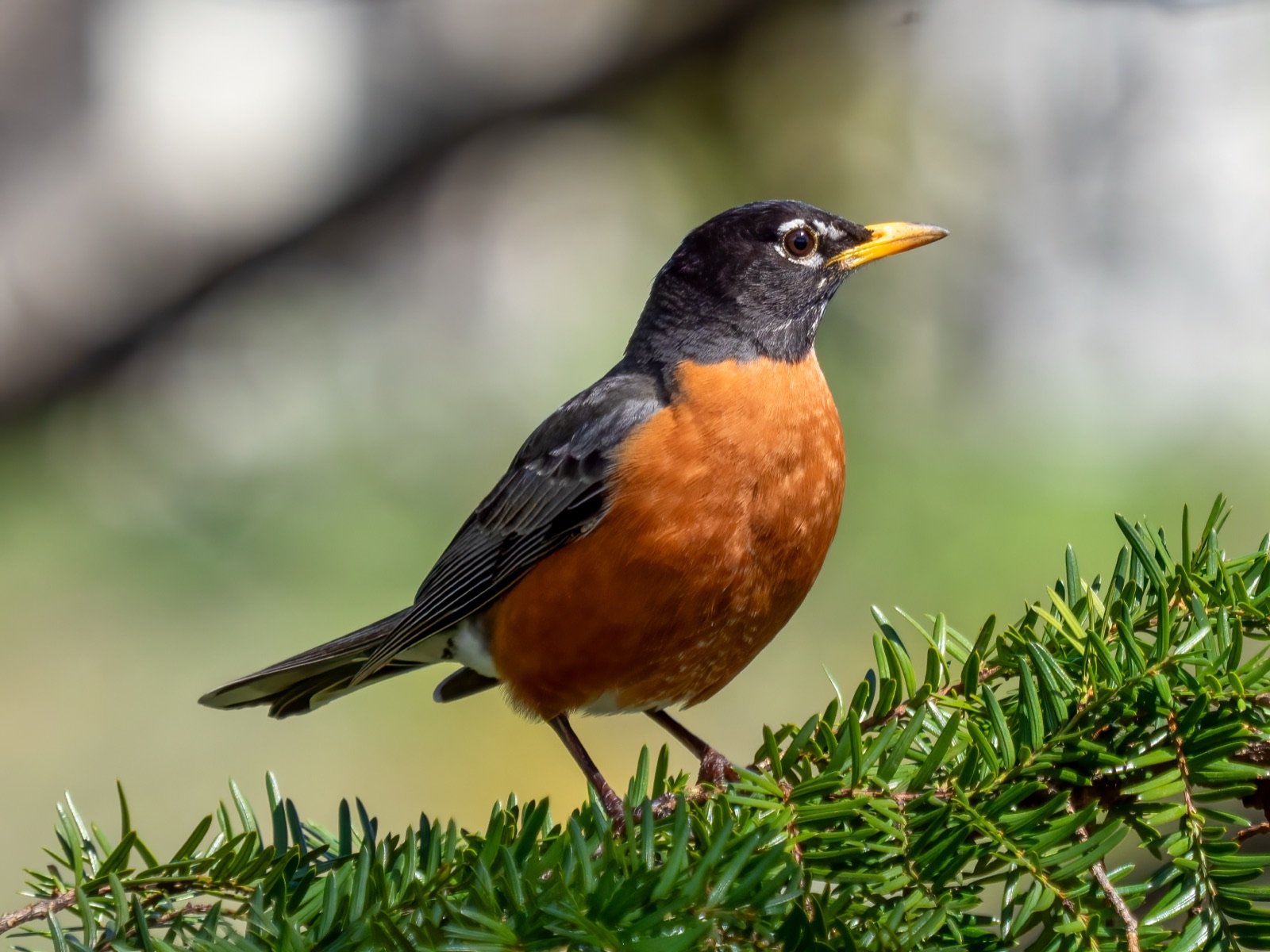
Photo by Rhododendrites, licensed CC BY-SA 4.0, via Wikimedia Commons
The American Robin is one of the most familiar and widespread songbirds in North America, often held up as a classic sign of spring even though many populations actually stay put through winter, simply shifting from lawns to fruiting trees.
Identification
Adults have a gray-brown back, a warm orange-red breast (brighter and richer in males, duller in females), a dark head, and a yellow bill. Juveniles show a spotted breast rather than the solid orange of adults, which can cause confusion with other thrushes.
Habitat & Range
Extremely widespread across nearly all of North America, from suburban lawns and parks to forests, fields, and tundra edges in the far north. Robins are famously common on mowed lawns, where they hunt earthworms by sight and sound.
Diet & Feeding
Diet shifts seasonally — earthworms and insects dominate in spring and summer, while fruit and berries make up most of the diet in fall and winter, when robins often gather in large nomadic flocks following fruiting trees. Robins famously tilt their heads while foraging on lawns, appearing to "listen" for worms, though they're primarily using sight.
Nesting & Breeding
Females build a sturdy cup nest of grass and twigs reinforced with mud, typically in a tree fork or on a building ledge, 5–25 feet up. Clutches usually contain 3–5 pale blue eggs — the source of the well-known "robin's egg blue" color — incubated for about 12–14 days, with chicks fledging around 13 days after hatching. Robins often raise two or three broods in a season.
Migration
American Robin migration is complex and only partial — many robins do move south in winter, but many others simply shift habitat locally, moving from lawns to wooded areas with fruiting trees, which is why robins can be seen year-round in much of their range despite the "first robin of spring" reputation.
How to Attract Them
Robins rarely visit typical seed feeders, since they're not primarily seed-eaters; a birdbath, open lawn area, and native fruit-bearing shrubs or trees (like serviceberry, dogwood, or holly) are more effective draws than a feeder stocked with seed.
Similar Species
Other thrushes, like the Varied Thrush in the West, share a similar body shape but differ in plumage pattern; juvenile robins' spotted breasts can be mistaken for a different thrush species entirely before a closer look reveals the characteristic robin shape and head pattern.
Fun Facts
- The pale blue color of robin eggs comes from a pigment called biliverdin, deposited as the shell forms.
- Robins can produce three broods or more in a single breeding season, more than most songbirds.
- A robin's "worm-listening" head tilt is now understood to be primarily visual, not auditory — they're looking, not listening, for movement in the grass.
- Robins can eat fermented berries in late fall and occasionally appear intoxicated as a result.
- Large winter flocks of robins, sometimes numbering in the hundreds or thousands, form around abundant fruit sources.
FAQ
+Do robins really signal the start of spring?
Not as reliably as the folklore suggests — many robins actually remain in the same general region through winter, simply becoming less visible as they shift from lawns to fruiting trees and travel in flocks, then become conspicuous again on lawns once they return to worm-hunting in spring.
+Why don't robins come to my bird feeder?
Robins mostly eat earthworms, insects, and fruit rather than the seeds found in typical feeders, so a birdbath or fruit-bearing plants are usually more effective at attracting them than a standard seed feeder.
+How can I tell a male robin from a female?
Males typically show a darker, blacker head and a deeper, brighter orange-red breast, while females tend to have a paler, grayer head and a duller breast color — though the difference can be subtle.
+Why are robin eggs blue?
The blue color comes from a pigment called biliverdin, deposited in the eggshell during formation — a trait shared with several other thrush species.
+How many broods do robins raise in a year?
American Robins often raise two to three broods per breeding season, reusing or rebuilding nests as needed.
+Do robins mate for life?
Not typically — robin pairs generally stay together for a single breeding season, and many robins choose a new mate the following year.
Sources
Trying to attract american robins to your own yard with camera-equipped gear? See our Smart Bird Feeders category for verified picks.