Northern Cardinal
Cardinalis cardinalis · Cardinalidae
A non-migratory, year-round backyard resident across the eastern and central US — the vivid red male is one of the most recognizable birds in North America.
Outdoor Tech Index Editorial Team · Last updated 2026-08-15
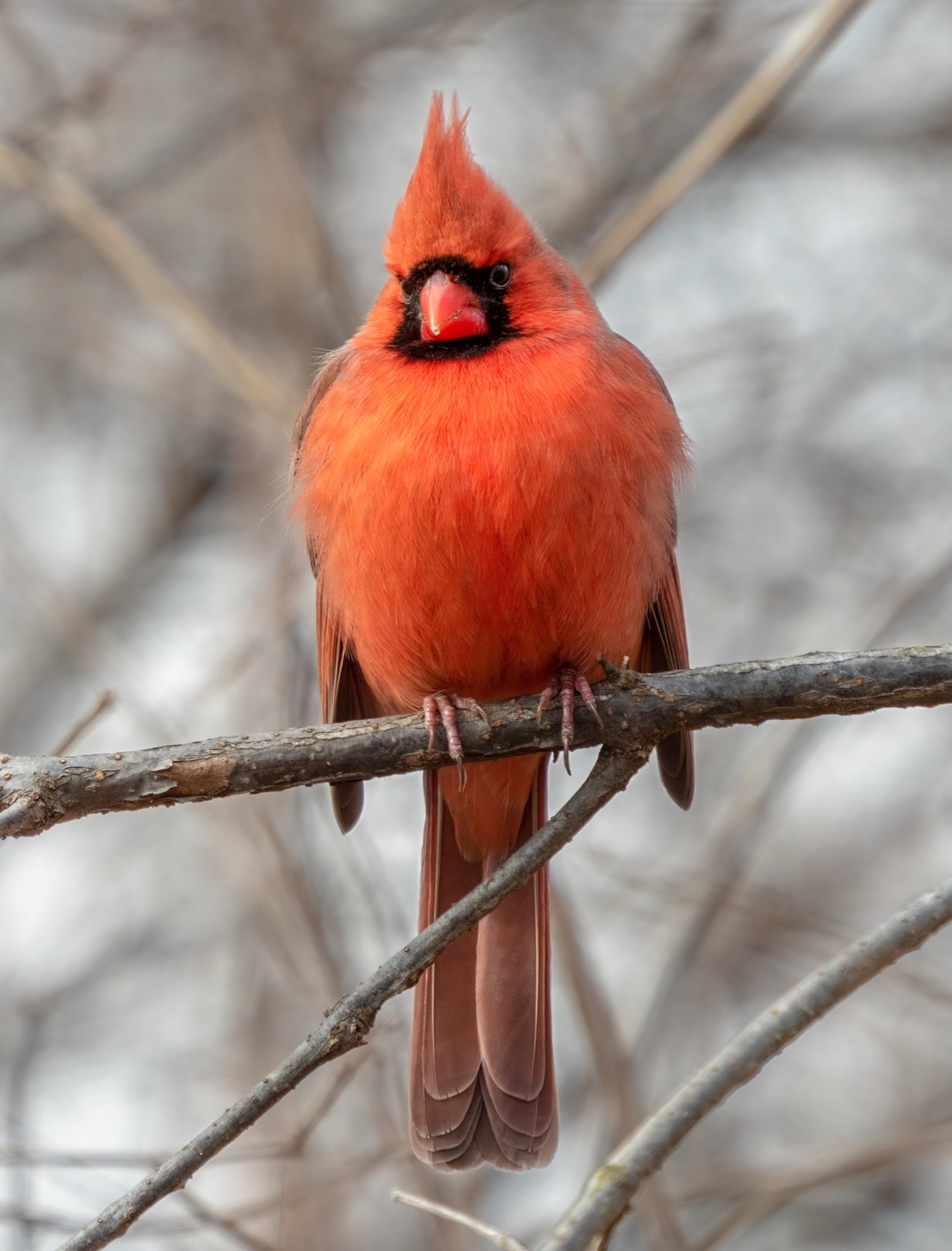
The Northern Cardinal is one of the most recognizable backyard birds in eastern and central North America — a non-migratory, year-round resident whose vivid red males stand out sharply against winter snow. It's the state bird of seven US states, more than any other species.
Identification
Adult males are almost entirely brilliant red with a black mask around the bill and a prominent crest. Females are warm buffy-brown overall with reddish tinges on the wings, tail, and crest, and share the same thick, cone-shaped orange-red bill and crest shape, making them identifiable even without the male's color. Both sexes have a stout seed-cracking bill.
Habitat & Range
Common in woodland edges, thickets, backyards, parks, and shrubby gardens across the eastern and central US, extending into southeastern Canada, Mexico, and parts of the desert Southwest. Cardinals don't migrate and typically stay within a fairly small home range year-round.
Diet & Feeding
Primarily seeds and grain, especially sunflower seeds, along with fruit, and insects during the breeding season, which are fed heavily to nestlings. Cardinals are ground and low-shrub feeders as much as feeder visitors, often seen foraging beneath feeders for dropped seed.
Nesting & Breeding
Females build a cup nest of twigs, bark strips, and grass, typically low in dense shrubs or small trees, 3–10 feet up. Clutches usually contain 2–5 eggs, incubated by the female for about 12–13 days; chicks fledge roughly 9–11 days after hatching. Cardinals often raise two or more broods per season, and males feed the female during incubation.
Migration
Northern Cardinals are non-migratory — they hold territories year-round and are one of the more reliable backyard birds to see in winter, when males' red plumage stands out most against snow.
How to Attract Them
Platform or hopper feeders stocked with black-oil sunflower seed are a strong draw, and dense shrubby cover nearby gives cardinals the concealment they prefer over open lawns. They're also more likely than many species to feed on the ground beneath a feeder rather than only at the feeder itself.
Similar Species
The male's all-red plumage with a black face mask is distinctive across most of its range; the Pyrrhuloxia, found in the desert Southwest, is a similar grayish relative with a shorter, more curved yellowish bill that can be confused with a female cardinal at a glance.
Fun Facts
- Cardinals are one of the few North American songbirds where females sing — often from the nest, possibly to signal to the male when to bring food.
- Mated pairs often stay together year-round and can be seen sharing seeds, beak to beak, during courtship.
- Cardinals are the state bird of seven states: Illinois, Indiana, Kentucky, North Carolina, Ohio, Virginia, and West Virginia.
- Males feed their mate during courtship and while she's incubating eggs.
- Bright red plumage comes from pigments called carotenoids obtained through diet, particularly red fruits.
FAQ
+Do cardinals migrate?
No — Northern Cardinals are year-round residents throughout their range and don't undertake seasonal migration.
+Why are male and female cardinals colored so differently?
This is a common pattern in birds called sexual dimorphism; the male's bright red likely plays a role in attracting mates and signaling fitness, while the female's more subdued coloring may help her stay camouflaged while nesting.
+What's the best food to attract cardinals?
Black-oil sunflower seed is widely considered one of the most effective foods, along with safflower seed, which cardinals eat readily but squirrels tend to avoid.
+Do cardinals use birdhouses?
No — cardinals build open cup nests in dense shrubs rather than using enclosed nest boxes.
+How long do cardinals live?
The oldest known wild Northern Cardinal on record lived over 15 years, though average lifespan in the wild is considerably shorter, generally a few years.
+Are cardinals aggressive toward other birds?
They can be territorial, particularly males during breeding season, sometimes attacking their own reflection in windows or mirrors, mistaking it for a rival.
Sources
Trying to attract northern cardinals to your own yard with camera-equipped gear? See our Smart Bird Feeders category for verified picks.