Ruby-throated Hummingbird
Archilochus colubris · Trochilidae (hummingbirds)
The only hummingbird that commonly breeds east of the Great Plains — tiny, iridescent, and capable of crossing the Gulf of Mexico in a single nonstop flight.
Outdoor Tech Index Editorial Team · Last updated 2026-08-15
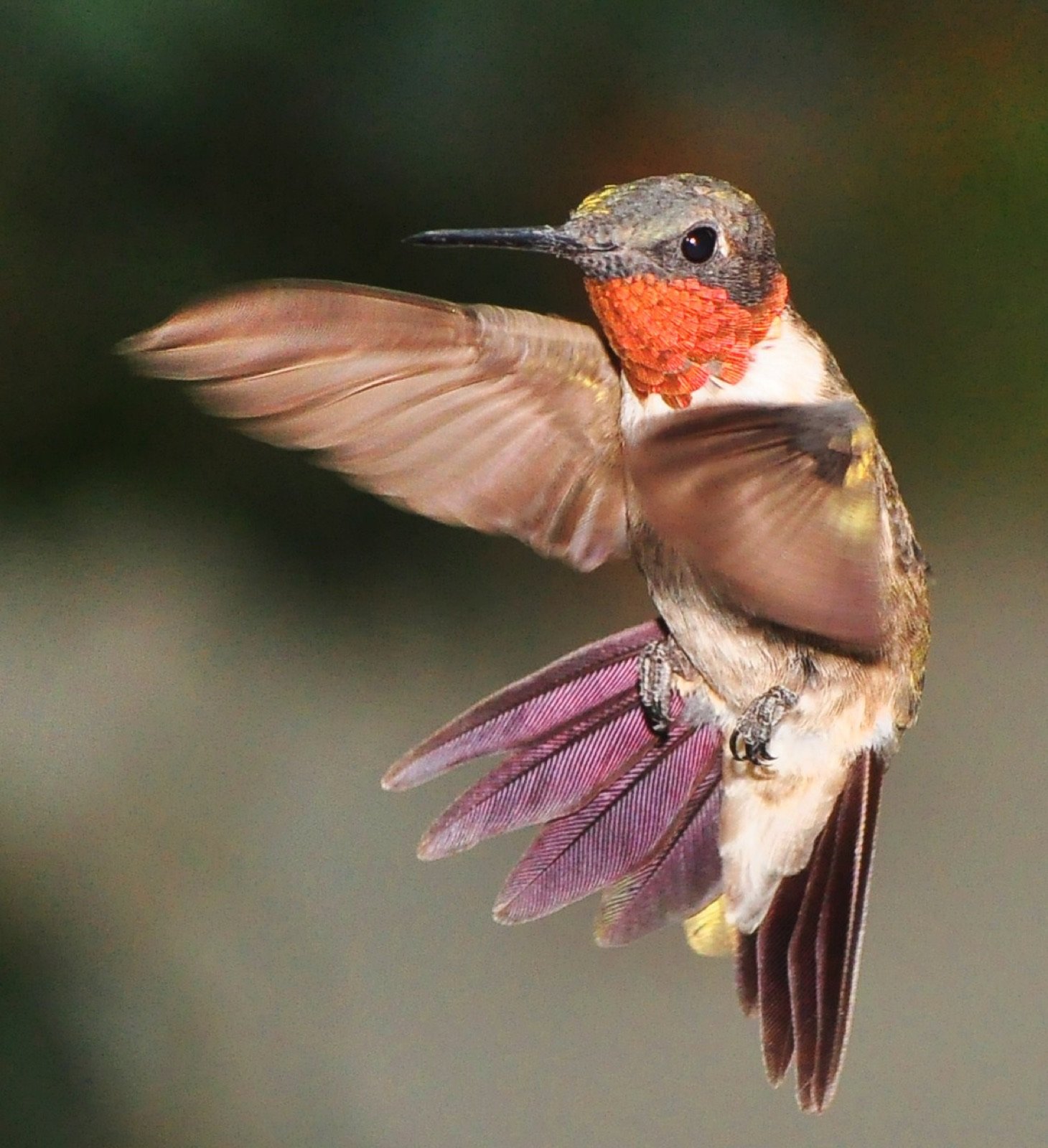
Photo by jeffreyw, licensed CC BY 2.0, via Wikimedia Commons
Ruby-throated Hummingbirds are the only hummingbird species that commonly breeds east of the Great Plains in North America, and for most people east of the Mississippi, "hummingbird" simply means this one. Weighing barely more than a penny, they're a genuine backyard spectacle — hovering at flowers and feeders, wings beating roughly 50 times per second, visible mostly as a blur.
Identification
Adult males have an iridescent ruby-red throat patch (gorget) that can look black in poor light and only flashes red when it catches direct sunlight at the right angle, plus an emerald-green back and white underparts. Females and juveniles lack the red gorget, showing a plain whitish throat, sometimes with faint dusky streaking, and often a bit more white in the tail. Both sexes are tiny — about the size of a ping-pong ball — with a long, thin, straight bill built for reaching deep into tubular flowers.
Habitat & Range
Breeds across eastern and central North America, from the Gulf Coast up into southern Canada, in open woodlands, gardens, meadow edges, and suburban yards with flowering plants. Nearly the entire population migrates to Mexico and Central America for winter, with many individuals crossing the Gulf of Mexico in a single nonstop flight of roughly 500 miles.
Diet & Feeding
Primarily nectar from tubular flowers, supplemented heavily with small insects and spiders, which supply the protein and fat that nectar alone can't provide — this is especially critical when feeding nestlings. A hummingbird's daily energy needs are enormous relative to its size, so they feed frequently throughout the day, visiting hundreds of flowers.
Nesting & Breeding
Females build the nest alone — a tiny cup about the size of a walnut half, made of plant down, held together with spider silk, and camouflaged on the outside with lichen flakes. It's typically saddled onto a thin, downward-sloping branch 10–40 feet up. Two pea-sized white eggs are typical, incubated for 12–16 days, with chicks fledging around 18–22 days after hatching. Males play no role in nest building or chick-rearing beyond mating.
Migration
Most Ruby-throated Hummingbirds winter in southern Mexico and Central America, with a portion crossing the Gulf of Mexico directly in fall and spring — a nonstop overwater flight lasting around 18–22 hours. Spring arrival in the southern US typically begins in March, reaching northern breeding areas by May.
How to Attract Them
Red or orange tubular flowers (like bee balm, trumpet vine, or cardinal flower) are a reliable draw, and a nectar feeder filled with a simple 4-parts-water-to-1-part-white-sugar solution (no dye, no honey) supplements natural forage. Cleaning feeders every few days in hot weather prevents mold and fermentation, which can harm the birds. See our Smart Bird Feeders category for camera-equipped feeders built to capture their fast, hovering visits.
Similar Species
In the western half of North America, several other hummingbird species (Anna's, Rufous, Black-chinned) overlap in range and can look similar at a quick glance; Ruby-throated is essentially the only breeding species in the eastern half of the continent, which makes eastern identification comparatively simple. Female and juvenile Ruby-throated can be confused with female Black-chinned Hummingbirds where their ranges meet in the central US.
Fun Facts
- Ruby-throated Hummingbird hearts can beat over 1,200 times per minute during flight.
- They can fly forward, backward, and briefly upside-down, and are the only birds capable of sustained hovering flight.
- Despite weighing less than a nickel, some individuals cross the Gulf of Mexico nonstop, a flight of around 500 miles.
- A hummingbird's tongue is forked and can lap nectar at roughly 10–15 licks per second.
- They remember individual flowers and feeders from year to year and often return to the same yard.
FAQ
+Do hummingbirds really migrate alone?
Yes — hummingbirds migrate solo rather than in flocks, and juveniles make their first migration south without guidance from adults, navigating instinctively.
+Will putting out a feeder stop hummingbirds from migrating?
No — hummingbird migration is triggered primarily by changing day length, not food availability, so a feeder left up in fall won't cause a hummingbird to delay migration when it's ready to go.
+How often should I change hummingbird nectar?
In hot weather, every 2–3 days; in cooler weather, once a week is generally sufficient — sooner if the solution looks cloudy.
+Can I use honey or red dye in nectar?
No — honey can ferment and grow harmful bacteria or fungus, and red dye isn't necessary and may be harmful. A plain 4:1 water-to-sugar ratio is the standard recommendation.
+Do male hummingbirds help raise the chicks?
No — female Ruby-throated Hummingbirds build the nest, incubate the eggs, and feed the chicks entirely on their own.
+How can I tell a male from a female?
Adult males show an iridescent red throat patch (gorget); females and juveniles have a plain whitish throat.
+Why do hummingbirds chase each other away from feeders?
They're highly territorial around reliable food sources and will aggressively defend a feeder or flower patch from other hummingbirds, even much larger birds.
Sources
Trying to attract ruby-throated hummingbirds to your own yard with camera-equipped gear? See our Smart Bird Feeders category for verified picks.