Blue Jay
Cyanocitta cristata · Corvidae (crows and jays)
A large, vocal, strikingly patterned corvid known for its intelligence, hawk mimicry, and role in spreading oak trees by caching acorns.
Outdoor Tech Index Editorial Team · Last updated 2026-08-15
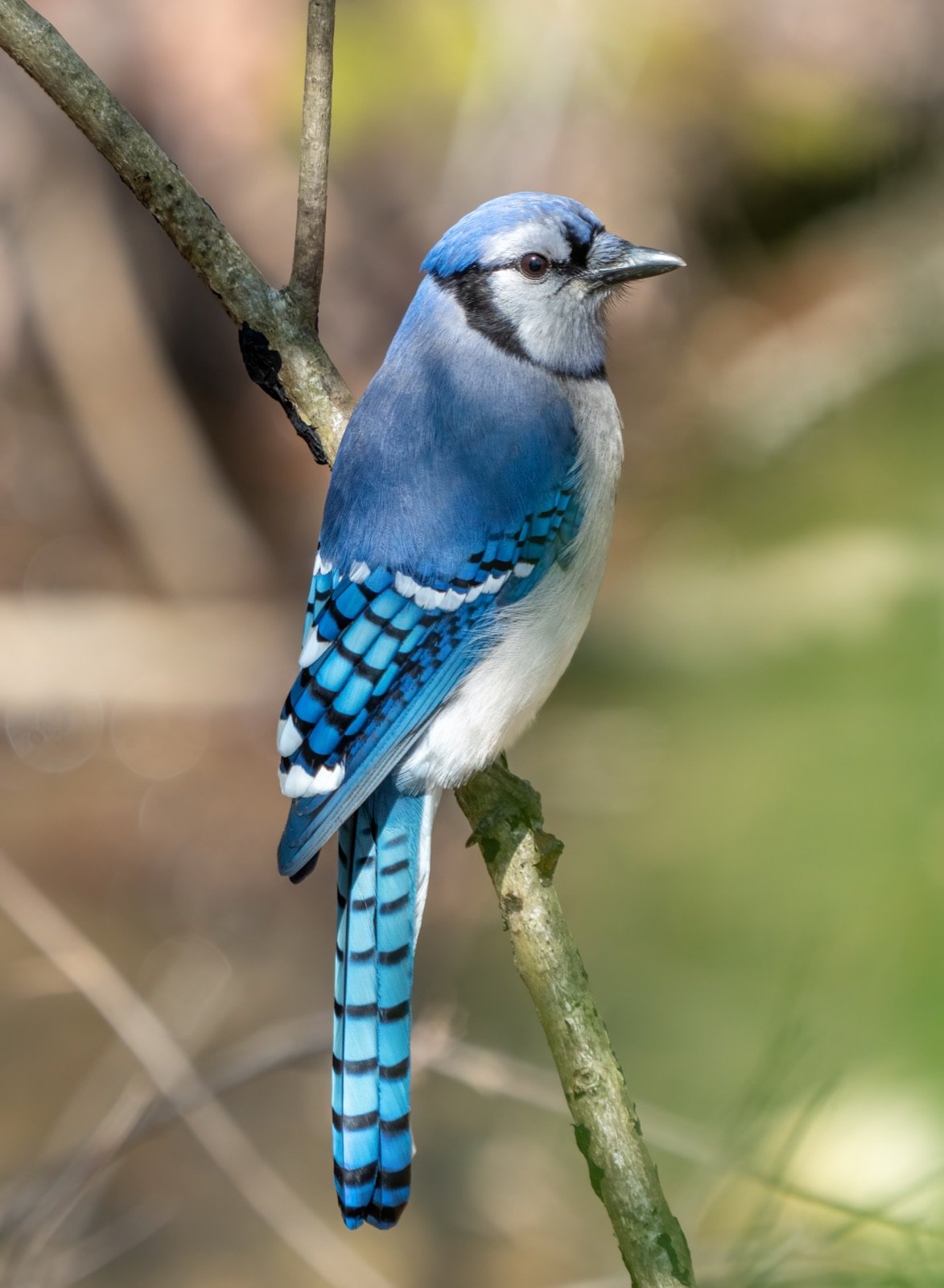
Blue Jays are large, vocal, strikingly patterned songbirds found across eastern and central North America, known for their intelligence, loud calls, and sometimes assertive personality at backyard feeders.
Identification
Blue Jays show a bright blue crest, back, wings, and tail with a whitish face, chest, and underparts, a black necklace-like band across the throat, and bold white and black barring on the wings and tail. Sexes look alike. The crest can be raised or flattened depending on the bird's mood.
Habitat & Range
Found in a wide range of wooded habitats, from mature forests to suburban neighborhoods and parks across the eastern and central US and into southern Canada, generally wherever oak trees are present, since acorns are a major food source.
Diet & Feeding
Omnivorous — acorns and other nuts, seeds, fruit, and insects make up most of the diet, along with occasional eggs or nestlings of other birds. Blue Jays cache food, particularly acorns, burying them for later retrieval, and are considered important dispersers of oak trees as a result.
Nesting & Breeding
Both parents build a bulky cup nest of twigs, bark, and moss, usually in the fork of a tree 10–25 feet up. Clutches typically contain 3–7 eggs, incubated mainly by the female for about 16–18 days, with chicks fledging around 17–21 days after hatching. Both parents feed the young.
Migration
Blue Jay migration is partial and not fully understood — some individuals, especially in the northern part of the range, migrate south in flocks during the day, while others remain in the same area year-round, sometimes even within the same population.
How to Attract Them
Peanuts (in the shell or shelled), sunflower seeds, and suet on a platform or tray feeder are effective, and Blue Jays are especially drawn to nearby oak trees. They're also known to mimic the calls of hawks, including Red-shouldered Hawks, possibly to scare other birds away from a feeder.
Similar Species
The Steller's Jay, found in western North America, is the closest look-alike but has a darker, blackish head and lacks the white face — the two species' ranges don't generally overlap, making regional location the easiest way to distinguish them.
Fun Facts
- Blue Jays are highly intelligent members of the crow family (Corvidae) and have been observed using tools and displaying complex social behavior.
- Their blue color isn't from blue pigment at all — it's a structural color caused by light scattering off the internal structure of their feathers; a crushed blue jay feather looks brown.
- Blue Jays can mimic the calls of several hawk species, which may help them scare off predators or competitors.
- A single Blue Jay can cache thousands of acorns in a single autumn, many of which are never retrieved and go on to become oak trees.
- Despite a reputation for aggression, Blue Jays are also known for tight-knit, monogamous pair bonds that can last for life.
FAQ
+Are Blue Jays aggressive toward other birds?
They can be assertive at feeders and are occasionally documented raiding the nests of smaller birds, but this behavior is relatively uncommon overall and doesn't dominate their diet, which is primarily plant-based.
+Do Blue Jays migrate?
Some do and some don't — Blue Jay migration is partial, and even within the same population, some individuals migrate south for winter while others stay put, for reasons not fully understood by researchers.
+Why does a Blue Jay sound like a hawk?
Blue Jays are capable vocal mimics and often imitate the calls of hawks like the Red-shouldered Hawk, possibly to warn other jays of a real hawk nearby or to clear a feeder of competing birds.
+What's the best way to attract Blue Jays?
Peanuts (shelled or in the shell) on a platform feeder are highly effective, along with proximity to oak trees, which supply their preferred natural food.
+Do Blue Jays remember people?
Members of the crow family, including jays, have demonstrated strong facial recognition and memory in research studies, and many backyard observers report jays appearing to recognize regular feeder-fillers.
+How is the Blue Jay's color possible without blue pigment?
The blue appearance comes from the microscopic structure of the feather barbs scattering light in a way that reflects blue wavelengths — a phenomenon called structural color, common in bird feathers.
Sources
Trying to attract blue jays to your own yard with camera-equipped gear? See our Smart Bird Feeders category for verified picks.