Black-capped Chickadee
Poecile atricapillus · Paridae (chickadees and tits)
A small, bold, endlessly active songbird known for its black cap and bib, its namesake call, and its fearless curiosity around people.
Outdoor Tech Index Editorial Team · Last updated 2026-08-15
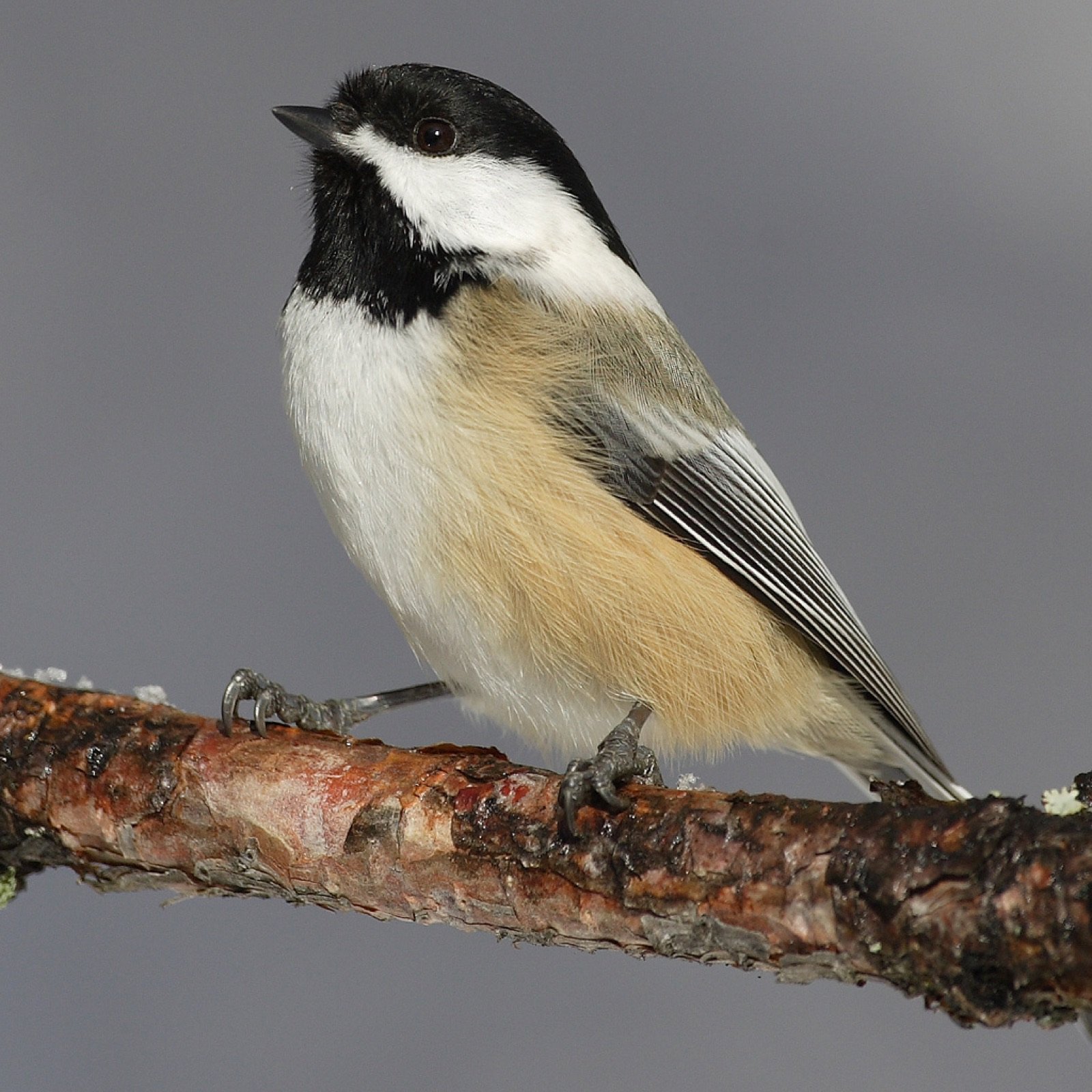
The Black-capped Chickadee is a small, bold, endlessly active songbird found across much of northern North America, well known for its distinctive black cap and bib, its "chick-a-dee-dee-dee" call, and its fearless curiosity around people.
Identification
Adults show a black cap and throat (bib), white cheeks, a soft gray back and wings, and buffy-white underparts. Sexes look alike. Its round-headed, big-eyed appearance and constant, acrobatic movement — often hanging upside down on branches or feeders — make it one of the easier small songbirds to recognize.
Habitat & Range
Common in deciduous and mixed forests, parks, and wooded backyards across most of the northern half of the US and Canada, generally staying within a defined home range year-round rather than moving widely.
Diet & Feeding
Highly varied — insects, spiders, and their eggs make up most of the diet in warmer months, shifting toward seeds and berries in winter. Chickadees regularly visit feeders and are known for taking a single seed, flying off to cache or eat it, then quickly returning for another.
Nesting & Breeding
Chickadees are cavity nesters, using natural tree holes, old woodpecker cavities, or nest boxes; they will also excavate their own cavity in soft, rotten wood. The female builds a moss base lined with soft material like fur, and lays 6–8 eggs, incubated for about 12–13 days, with chicks fledging around 16 days after hatching.
Migration
Black-capped Chickadees are largely non-migratory, generally remaining within the same general area year-round, though some individuals — particularly in years with poor food supply — will move irregularly ("irrupt") farther south than usual.
How to Attract Them
Black-oil sunflower seed and suet are highly effective, and chickadees are often among the first birds to discover a new feeder. Nest boxes with a roughly 1 1/8-inch entrance hole, or leaving dead/decaying trees standing where safe to do so, can also attract them for nesting.
Similar Species
The Carolina Chickadee, found in the southeastern US, looks nearly identical, and the two species' ranges meet in a narrow overlap zone where hybridization occurs, making visual identification alone unreliable in that region — voice and precise location are more dependable clues.
Fun Facts
- Chickadees cache thousands of food items each fall and can remember the location of a remarkable number of hiding spots for weeks afterward.
- Their brains actually grow new neurons each autumn to help with this spatial memory task, then shed them in spring — a phenomenon called neurogenesis.
- The number of "dee" notes in a chickadee's alarm call can indicate the size and threat level of a predator — more "dees" generally signal a smaller, more dangerous predator.
- Chickadees have one of the most complex vocal repertoires of any North American songbird.
- They can survive extremely cold winter nights by entering a controlled, temporary state of lowered body temperature called regulated hypothermia.
FAQ
+Are chickadees afraid of people?
Generally not very — chickadees are known for their boldness and curiosity, and with patience, some individuals can be hand-fed in backyards or parks.
+Do chickadees migrate?
Most Black-capped Chickadees don't migrate and stay within the same general area year-round, though irregular southward movements ("irruptions") occur in some years, likely related to food availability.
+How can I attract chickadees to nest in my yard?
A nest box with a small entrance hole (about 1 1/8 inches) mounted away from predator access, plus leaving some dead wood standing where it's safe to do so, can encourage cavity-nesting chickadees.
+How do chickadees survive cold winters?
They fluff their feathers for insulation, cache food extensively in fall, and can enter a controlled state of lowered body temperature overnight to conserve energy.
+What does the chickadee's call mean?
Their namesake "chick-a-dee-dee-dee" call functions partly as an alarm and can vary in the number of "dee" notes depending on the perceived threat level of a nearby predator — more notes can signal a greater threat.
+Can I tell a Black-capped Chickadee from a Carolina Chickadee by sight?
Not reliably — the two species look nearly identical, especially where their ranges overlap, and voice or geographic location are more dependable identification clues than plumage alone.
Sources
Trying to attract black-capped chickadees to your own yard with camera-equipped gear? See our Smart Bird Feeders category for verified picks.